Call Now - (617) 952-1505
Moving from New York to Seattle

New York to Seattle Movers

A coast-to-coast move should be planned around the two homes, not a mileage estimate alone. Esquire connects the New York pickup, the household inventory, and the Seattle delivery details in one written moving plan.

Begin with useful details

Build the quote around your shipment

Share both ZIP codes, the inventory, access conditions, and the dates you already know.

MM slash DD slash YYYY
Full Name
01New York pickupBuilding rules, curb access, stairs, and elevator time
02Cross-country shipmentRoughly 2,850–2,900 road miles, depending on the two addresses and route
03Seattle deliveryParking, approach, unloading path, and room placement
The move starts at the curb

Two city addresses shape the entire job

A New York apartment and a Seattle home can ask very different things of the crew. The estimate becomes more useful when those differences are discussed before loading day: where the truck can stand, how far each carry is, which entrance is approved, and when the building will release the elevator.

Departure file

Plan the New York exit before the truck arrives

Confirm the certificate-of-insurance wording, service entrance, move hours, elevator reservation, stairs, and curb conditions. NYC DOT does not offer a general permit to reserve curb space for ordinary commercial pickup and delivery, so the loading plan should reflect the actual block and posted rules. Check the block early. Review the city’s truck guidance when the address calls for it.

Arrival file

Know the Seattle unloading path, not just the ZIP code

A downtown loading bay, a Capitol Hill walk-up, and a craftsman home on a sloped street need different delivery plans. Share the building contact, parking instructions, entry steps, elevator or gate details, and the room where each large piece belongs. Well, that room plan saves a lot of backtracking once cartons start coming off the truck.

What connects them

The inventory is the working record for both crews

A room-by-room inventory shows more than the number of cartons. Yet the carton count is only the start. It identifies the bed frame that needs disassembly, the glass cabinet that needs added protection, the bicycle that will not fit a standard box, and the pieces that should go straight into storage. That distinction matters. If an item or stop is added later, say so before move day. The estimate and space plan may need to change.

Make the first survey count. Walk through closets, the storage cage, balcony, garage, and any off-site unit. Small missed areas can hold a surprising share of the shipment.
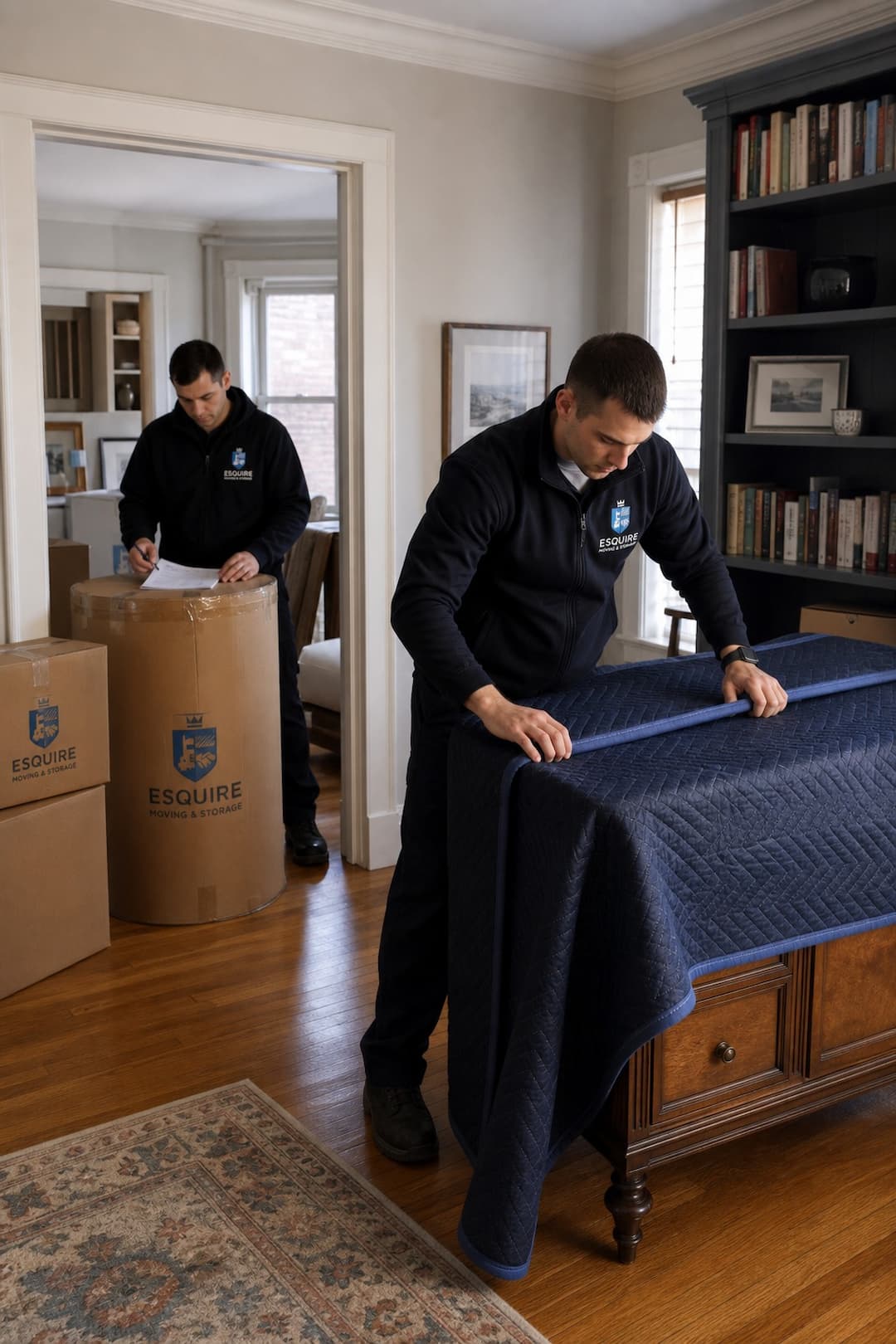
Esquire movers wrapping furniture and checking an inventory in a New York apartment
Protection is matched to the item, the doorway, and a long trip west.
Pack for the whole journey

Long-haul protection begins inside the apartment

Nearly 2,900 road miles give loose hardware, bare wood edges, and underfilled cartons plenty of time to become problems. Packing should suit the item rather than follow one rule for every room. Books need smaller, strong cartons. Dish barrels need enough cushioning to keep pieces from settling. Furniture needs clean blankets, secure wrap, and labels that remain readable at delivery. Still, some pieces need more.

Some clients want the entire home packed. Others handle clothing and books themselves, then ask the crew to protect artwork, mirrors, lamps, electronics, or selected cabinets. Both approaches can work. The important part is to decide who packs what before the estimate is finalized, because labor and materials belong in the written price.

FurnitureBlanket wrapping, protection for exposed edges, and disassembly where the doorway or safe transport requires it.
Fragile piecesItem-specific cartons or crating decisions made from dimensions, value, construction, and handling needs.
CartonsRoom labels that help the Seattle crew place boxes correctly without opening them to identify the destination.
First-night itemsDocuments, medication, keys, chargers, basic clothing, and other essentials kept with you instead of inside the shipment.
A quote you can read

The price should follow the work

No honest estimate comes from mileage alone. Shipment size, packing, access, timing, storage, and special handling determine what the move asks of the crew.

FMCSA requires interstate movers to provide a written estimate of charges. It should be based on an actual or virtual survey of the household goods, not a casual rate quote. In fact, the agency’s estimate guidance explains why added items or newly discovered access can change a binding estimate. Read it carefully.

Compare the same move. When reviewing estimates, check that each one covers the same inventory, packing work, access, stops, storage, and delivery terms. A lower number with missing work is not the same offer.
01

Shipment

List the furniture, cartons, artwork, exercise equipment, bikes, storage contents, and unusually heavy or delicate pieces.

02

Access

Record stairs, elevator time, loading docks, long carries, service entrances, gates, parking conditions, and building paperwork at both homes.

03

Packing

Separate owner-packed cartons from full packing, partial packing, fragile-item work, furniture protection, and any custom crating request.

04

Dates and stops

Share the pickup range, Seattle availability, storage needs, closing dates, temporary housing, and additional pickup or delivery addresses.

05

Written terms

Read the estimate, order for service, valuation selection, bill of lading, payment terms, and delivery conditions before signing.

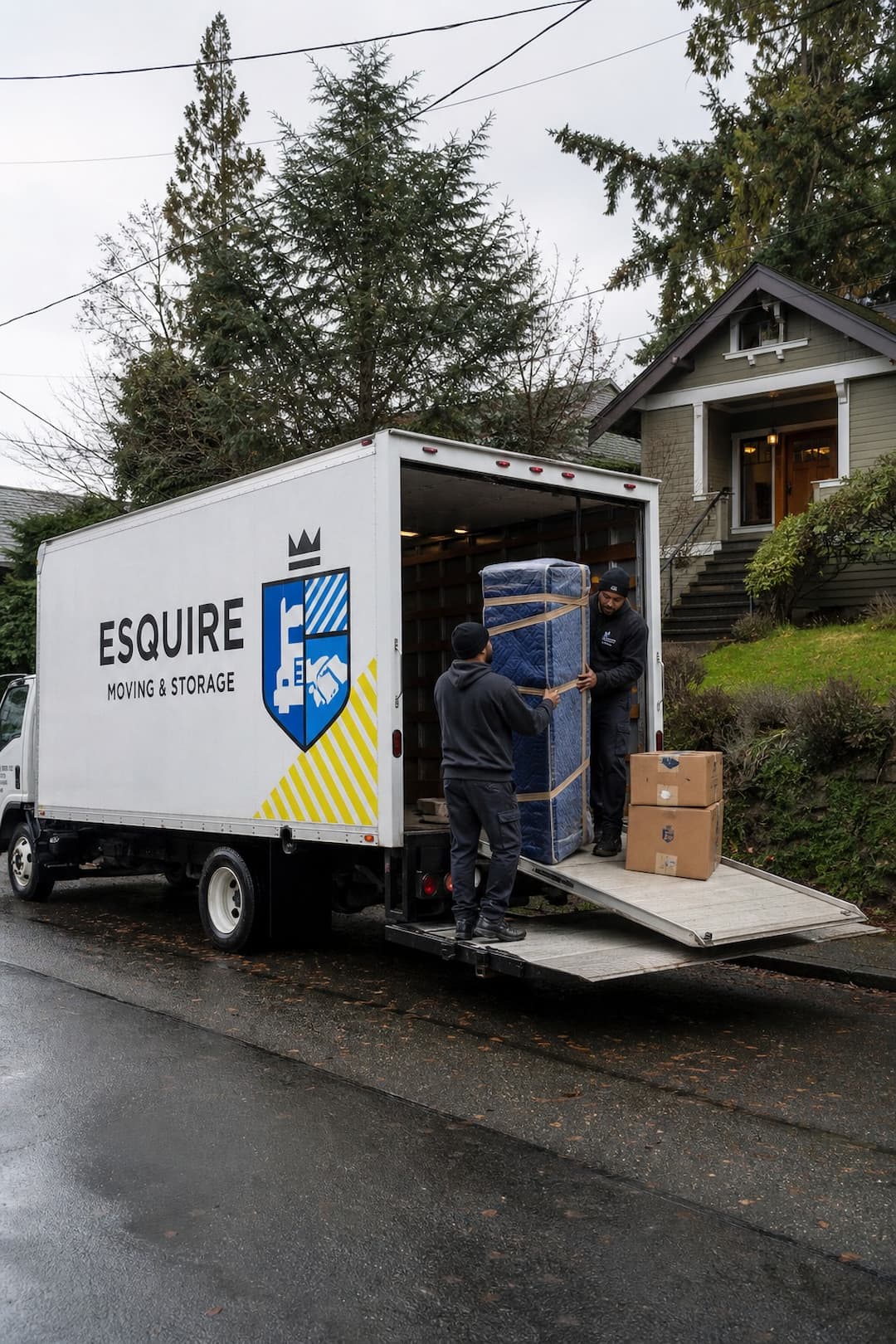
Esquire movers unloading protected furniture at a Seattle craftsman home
Seattle delivery is quicker when the curb, entry, and final room are settled before the doors open.
Prepare the Seattle side

Delivery day needs its own plan

Do not let the destination remain a blank line until the truck is close. A useful delivery file includes the local contact, approved hours, truck approach, unloading position, building entry, and a simple room plan. If the street is narrow or steep, photographs can help show what the crew will meet. Photos help.

Seattle allows temporary no-parking zones for uses that include moving vans. The city explains the application, signs, and timing on its Temporary No Parking Zone page. Depending on the location, commercial vehicle access may also require a Restricted Area Parking permit. Building management or a local contact should confirm which steps apply to the address and arrange them early enough.

Weather deserves a practical mention, too. Damp pavement and light rain are manageable, but the path from truck to door should be clear. Even so, do not improvise at the doorway. Protect floors where needed, keep exterior doors available, and decide where wet outer materials can be removed without crowding the entrance.

  • Meet the crewKeep a reachable delivery contact who can answer building and placement questions.
  • Open the pathUnlock gates, reserve the elevator, clear steps, and protect floors before unloading starts.
  • Direct the roomsUse clear room names so cartons and furniture land once, in the right place.
  • Check the inventoryReview items as they arrive and note a missing or damaged piece before the paperwork is completed.
A calmer moving calendar

Set the decisions in the order they become useful

The calendar does not need to be complicated. It needs to reveal the fixed dates early, leave enough time for building arrangements, and keep the delivery address from becoming a last-minute surprise. After all, a closing date is useful only when the moving plan accounts for it.

At the survey

Show the full shipment

Walk through each room and storage area. Discuss packing, fragile pieces, access, and any item that may need special preparation.

Before booking

Read the estimate and delivery terms

Confirm the inventory, services, valuation choice, payment terms, and what the delivery window actually means for your shipment.

Before pickup

Secure the New York building time

Provide approved hours, paperwork, elevator details, service entrance instructions, and a contact who can resolve access questions.

While goods are in transit

Keep the destination contact current

If the Seattle address, phone number, closing date, or access changes, update the mover promptly. Maybe the new building has a shorter move-in window than expected; that matters before arrival. Keep it current.

Before delivery

Confirm the curb and the rooms

Finalize parking arrangements, clear the entry, reserve the elevator or loading area, and decide where large pieces and labeled cartons belong.

Keep a small landing kit outside the shipment

Carry the items you may need before the truck arrives: identification, lease or closing documents, medication, device chargers, keys, a change of clothes, basic toiletries, and a few household essentials.

DocumentsMedicationKeysChargersClothesEssentials
More long-distance routes

Related moves from New York and to Seattle

These live Esquire route pages may help if your destination changes from Seattle to another western city, or if the household is arriving in Washington from a different East Coast origin.

Before you book

New York to Seattle moving FAQ

These are the questions that clarify the real job: distance, delivery timing, access at both homes, packing, storage, written estimates, and how to verify an interstate mover.

How far is Seattle from New York by road?

The trip is roughly 2,850 to 2,900 road miles. Exact mileage depends on the pickup and delivery addresses and the route used. Truck restrictions, required stops, traffic, road conditions, and weather can affect the journey.

How long does a New York to Seattle move take?

The delivery window depends on the shipment size, loading time, transportation plan, driver-hour requirements, weather, other scheduled stops, and readiness at the Seattle address. Ask for the pickup and delivery terms in writing instead of treating passenger-car drive time as the moving schedule.

What affects the cost of moving from New York to Seattle?

The shipment inventory, access at both homes, packing and materials, transportation terms, requested dates, storage, valuation selection, extra stops, and special handling can all affect the quote. An in-home or video survey helps identify the work before the estimate is prepared.

Which New York building details should I provide?

Share the approved move hours, elevator or loading-dock reservation, certificate-of-insurance wording, service entrance, stairs, carry distance, parking instructions, and any furniture that may need disassembly to leave the home safely.

Should I reserve curb space for a moving truck in Seattle?

Seattle offers Temporary No Parking Zones for uses that include moving vans. The address and parking conditions determine what is available, and commercial vehicle access may require a Restricted Area Parking permit. Check the current city instructions and arrange signs and approvals within the stated lead times.

Can packing or temporary storage be added?

Yes, subject to availability and the agreed services. You may request full packing, help with selected rooms or fragile pieces, and storage when the New York pickup date and Seattle delivery date do not line up.

How do I verify an interstate moving company?

Interstate movers must be registered with the federal government and have a U.S. DOT number. Use the FMCSA mover search to review registration status, business type, complaint information, and safety information.

From the New York curb to the Seattle rooms

Request a New York to Seattle moving quote

Tell us what is moving, how the crew reaches both homes, and which dates or property reservations are fixed. A complete starting picture gives you a more useful conversation and a quote built around the actual shipment.

Exact pickup and delivery ZIP codes
Room-by-room inventory
Parking, stairs, elevators, and gates
Packing, storage, and extra stops
Start your moving quote

Tell us about the move

Both ZIP codes and a complete inventory make the first estimate more useful.

Get a Quote