The furniture
Dimensions, weight, construction, loose components, glass, stone, and suitable protected lifting points.




When a sofa, cabinet, table, or other bulky piece cannot clear the stairs, elevator, or doorway, an exterior hoist may provide another route. Esquire Moving reviews the item, building, opening, and surrounding area before approving the work.
U.S. DOT 2820253 · MC-940499 · MDPU 31796
The first question is whether the piece can be carried at a different angle, partially disassembled, or moved through another interior entrance. Hoisting is considered when those routes are unavailable or would expose the furniture or building to greater risk.
The piece must clear the exterior opening and still have a workable path to its final room. Measurements at both ends matter.
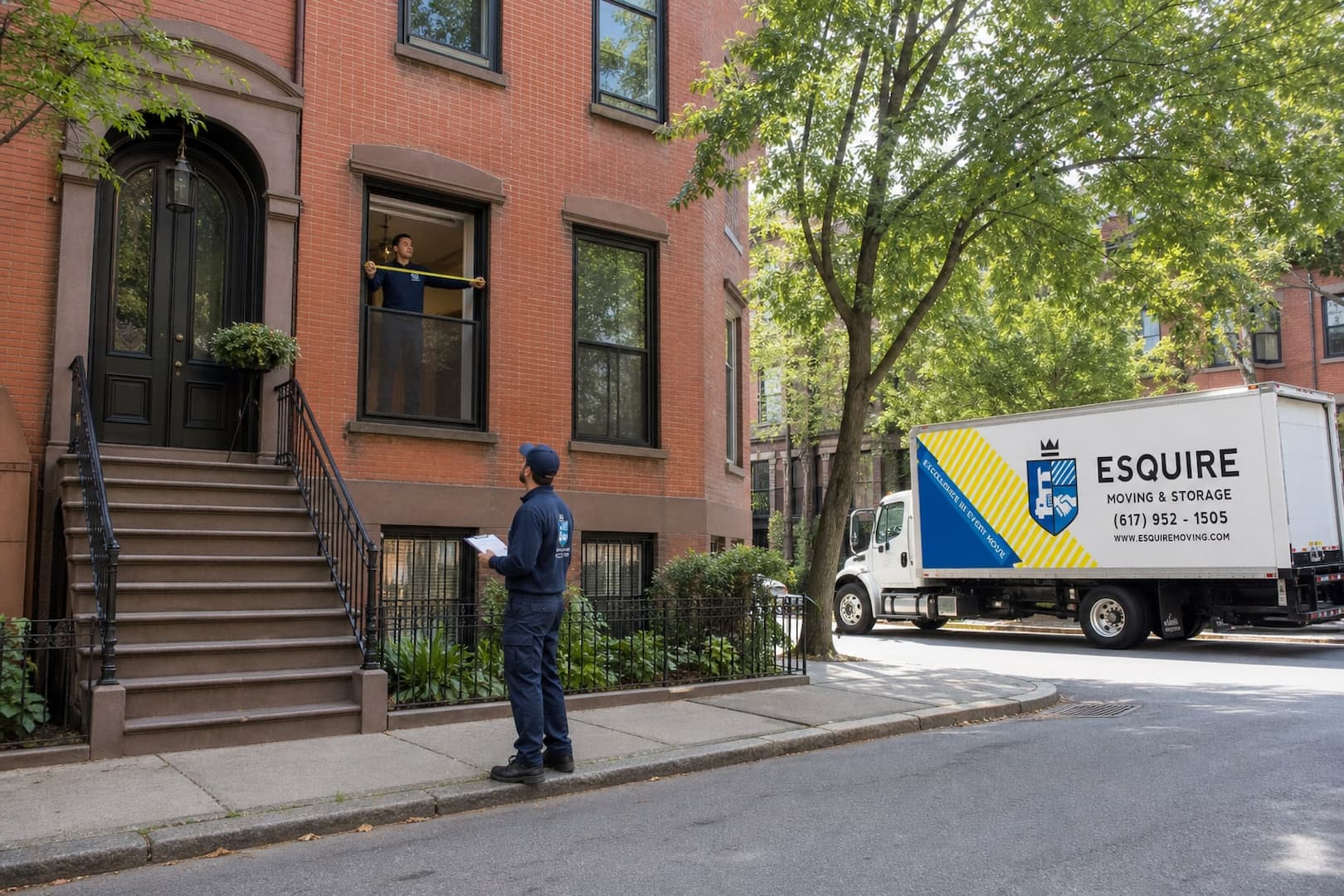
Photos help the team assess the route, but final approval still depends on the conditions at the property.
This Esquire Moving video shows furniture hoisting in practice. Every building and item is different, so the crew confirms the route, protection, working positions, and communication plan for each approved job.
A large opening alone is not enough. A safe plan depends on the complete route and the crew's ability to control the piece from the ground to its receiving point.
Dimensions, weight, construction, loose components, glass, stone, and suitable protected lifting points.
Clear width and height after accounting for fixed frames, railings, trim, screens, and the required handling space.
Enough room for the crew to bring the item inside, set it down, unwrap it, and move it to the intended location.
Distance from the building, overhead obstructions, trees, wires, awnings, balconies, and pedestrian activity.
Reliable positions for the assigned crew, protective materials, equipment, and a controlled area below the lift.
Property authorization, permitted work hours, loading access, parking, weather, and any public-space requirements.
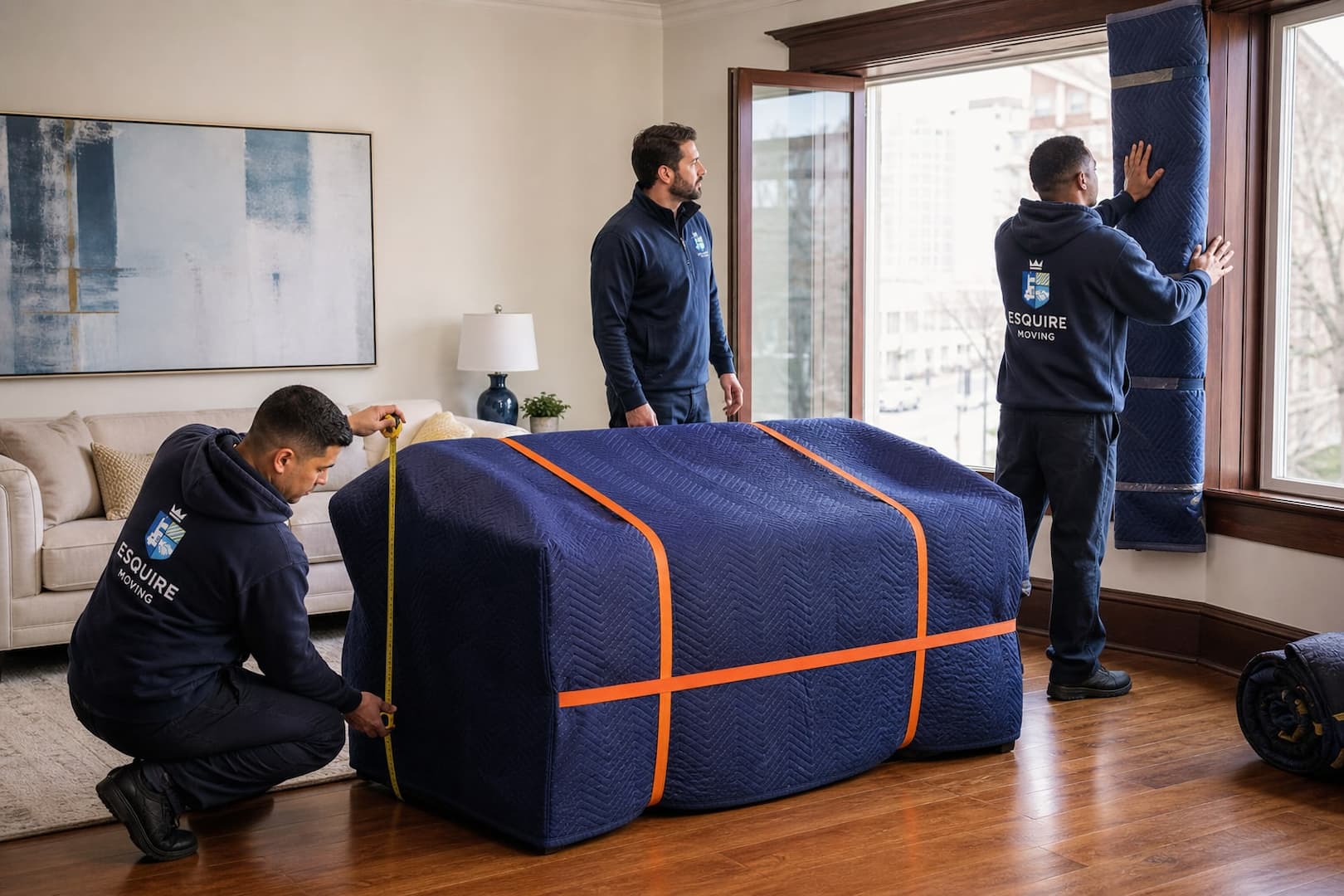
Provide dimensions, weight information, floor, opening measurements, and clear photos from inside and outside.
The team checks the normal carry route, disassembly options, exterior path, and whether additional equipment is needed.
Building permission, parking, public-space needs, crew positions, protection, timing, and weather are addressed.
For approved work, the crew protects the piece, controls the exterior movement, receives it inside, and moves it into place.
Esquire Moving requests at least 48 hours' notice for hoisting needs.
This charge is not a complete move estimate. Moving labor, protection, parking, permits, powered lifting equipment, and other job-specific needs may affect the overall price.
Confirm the current charge and approved scope before move day.
Good photos and measurements can quickly rule out an opening that is too small or reveal an obstruction that needs a different plan.
A hoist in a private driveway or courtyard can have very different requirements from a job beside a busy Boston sidewalk. Tell Esquire where the truck, crew, protected work area, and any lifting equipment could be positioned.
If the work occupies or restricts a street or sidewalk, the City may require a street occupancy plan, advance application, signage, or a police detail. Review the City's current street occupancy guidance before the move date. A moving-truck permit is not required by Boston, but it can reserve parking for the truck.
When powered hoisting machinery is involved, operator and equipment requirements may also apply under Massachusetts hoisting rules. Equipment and permit responsibilities must be confirmed for the specific job.
Hoisting may be considered when a bulky item cannot safely clear the available stairs, elevator, hallway, or doorway and a suitable exterior opening offers a workable route. Esquire reviews ordinary carrying and disassembly options before approving an exterior lift.
Esquire Moving lists a hoisting charge of $50 per item, per flight. That is not the complete price of a move. Labor, protection, parking, permits, powered equipment, and other job-specific needs may affect the overall estimate. Confirm the current charge and written scope before scheduling.
Contact Esquire Moving at least 48 hours before the requested work. More notice is helpful when building approval, reserved parking, public-space permits, a certificate of insurance, or powered lifting equipment may be needed.
An item reported over 250 pounds requires separate review and may need a hydraulic lift, crane, qualified operator, or another moving plan. Weight alone does not determine approval; the building, height, opening, exterior path, and work area also matter.
No. The opening must provide enough clear space, the item must have a workable path inside, and the exterior area must allow the crew to control the movement. Fixed frames, railings, glass, trees, wires, awnings, pedestrian traffic, and building rules can make an opening unsuitable.
Send the item's width, depth, height, and reliable weight information; the floor; the clear opening dimensions; interior and exterior photos; and measurements of the normal carry route. Include the building contact, permitted move hours, and any known parking or insurance requirements.
Yes. Esquire Moving may decline or stop a hoist if the item, opening, weather, work area, surrounding property, or activity nearby creates an unreasonable risk. Keep the information current and report changes before the crew arrives.
Start with the move date, service type, and addresses. The team will follow up for photos, measurements, weight information, and building requirements before confirming whether hoisting is appropriate.
Submit your basic move details. We'll follow up for photos and measurements before confirming whether hoisting is appropriate.