A place to sleep
Identify the bedrooms and confirm which beds require disassembly and reassembly. Label bedding separately so it does not disappear among spare-room cartons.




A move is not finished when the last carton comes off the truck. Plan the rooms, furniture, and essentials you will need first with Esquire Moving, a Boston-based company serving Wilmington, Massachusetts.
Esquire Moving · Local and long-distance moves
Start with the first evening
Wilmington combines residential neighborhoods with commercial and industrial areas. Your own move may involve a house, an apartment, or a household with a work space. Instead of giving every box the same priority, decide what needs to be accessible when the crew leaves.
Identify the bedrooms and confirm which beds require disassembly and reassembly. Label bedding separately so it does not disappear among spare-room cartons.
Keep a small selection of everyday dishes, coffee supplies, and food for the first evening together. Point out fragile kitchen cartons before loading.
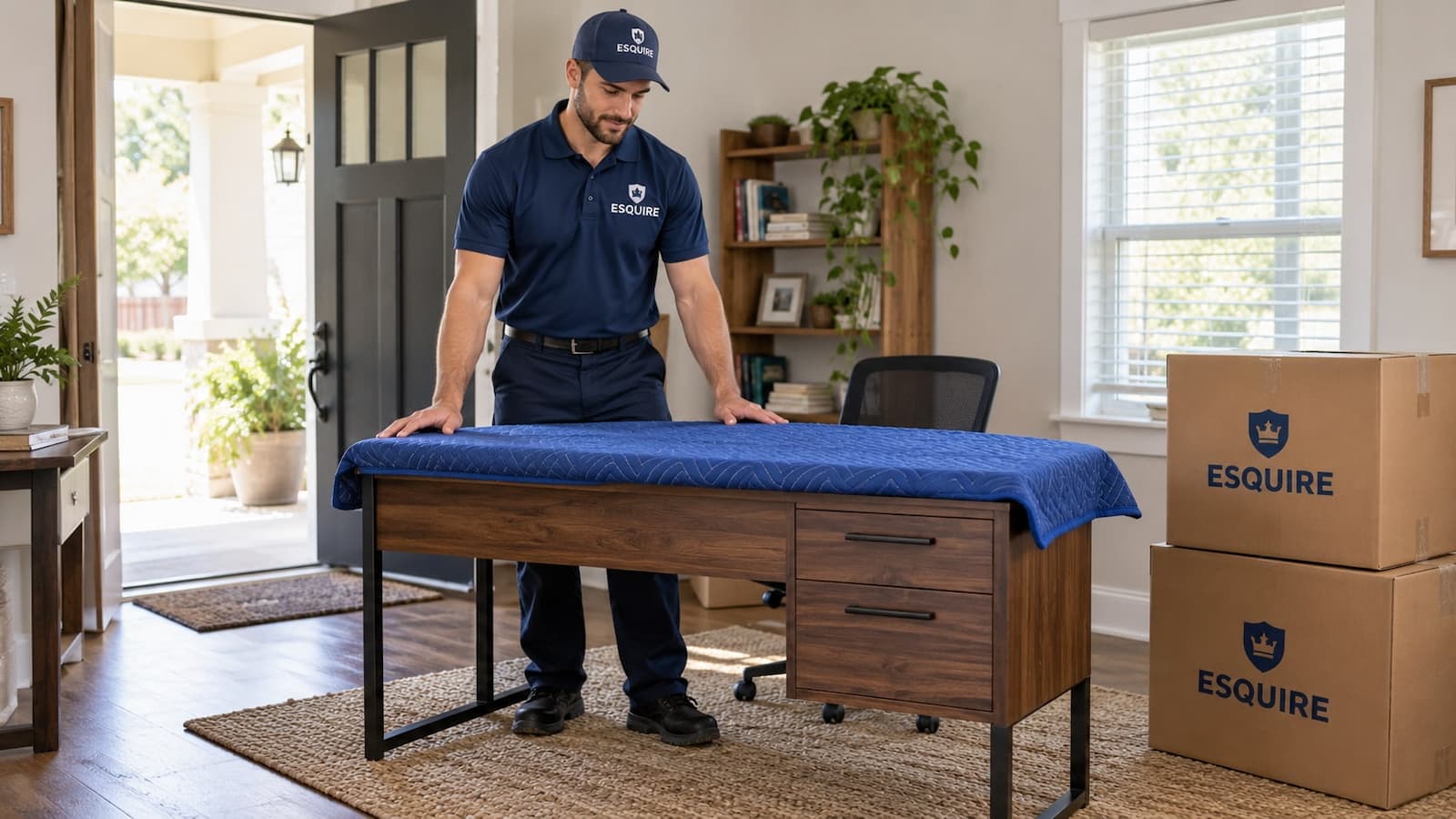
Choose where the desk and chair belong before delivery. Carry essential work files and the equipment you cannot be without separately from the main shipment.
Tell the coordinator which rooms matter most so placement, loading and access can be planned together.
Keep the workday essentials together
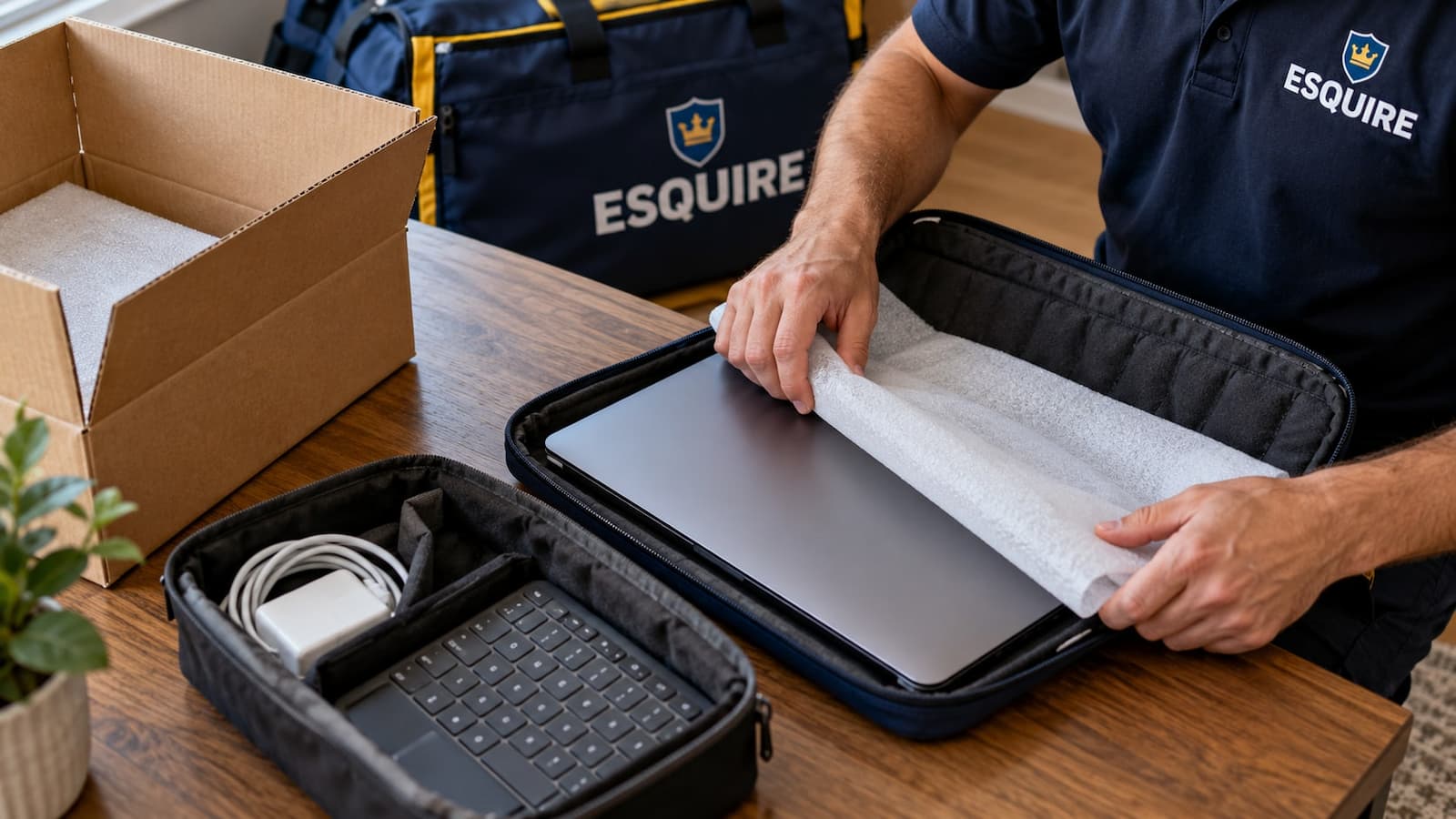
A home office usually contains more loose accessories than its furniture suggests. Separate cables by device, protect screens, and photograph the connections before disconnecting them. Back up important files before moving computers.
If you want help with the contents as well as the desk, request professional packing when you ask for the estimate. Explain which items you will pack and which should be included in the crew’s work.
A clearly marked accessory box helps at delivery. Internet service, device setup, and reconnecting your workplace systems still need their own arrangements; do not leave an essential work call dependent on unpacking the entire room.
From the truck to each room
A convenient street address does not tell the crew whether a desk fits around a stair landing. Share the floor, entry steps, narrow doors, and the destination of larger pieces. Photos are especially useful for a turn that is difficult to describe.
Outside, identify the proposed truck position, driveway clearance, and the path to the door. If an apartment or managed property has loading rules, move hours, or an elevator reservation, obtain those instructions before settling the schedule.
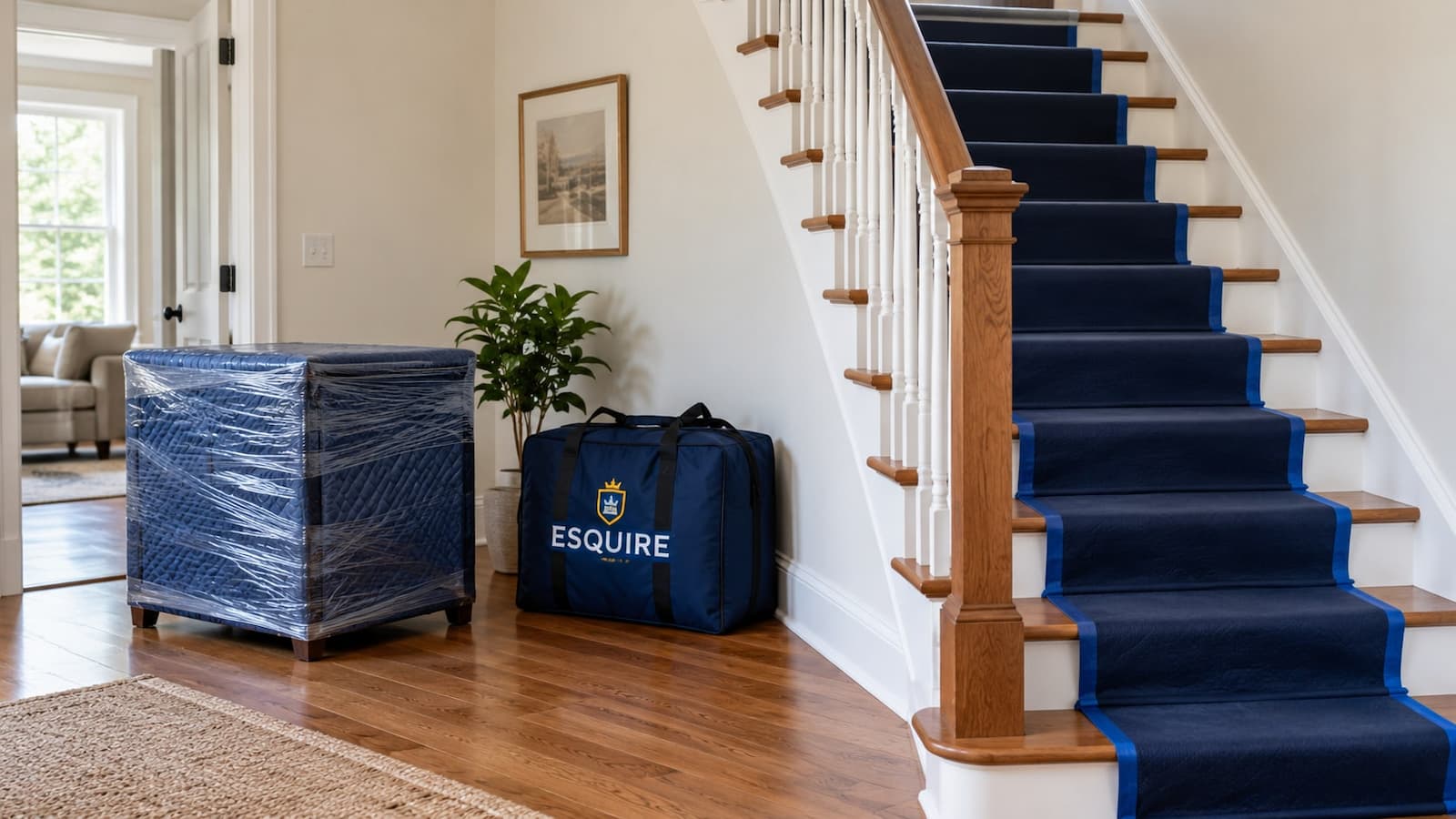
Keep both ends of a stairway clear and avoid filling the entry with packed cartons. Stage boxes in the agreed area so the crew can protect and use the carry path.
For an oversized cabinet, send its dimensions and photos of the entry route. Discuss possible disassembly before moving day. Do not remove railings or doors yourself to force a route that has not been assessed.
Furniture placement is easier when rooms have names everyone recognizes. A simple room label and one person available to answer questions can prevent repeated trips between floors.
When your dates do not align
If your new home is not ready for the full household, ask about moving and storage. Make a distinct inventory for items going to storage and another for the immediate delivery. Your essentials should not end up in the wrong group.
Explain which dates are confirmed and which depend on the handover. Ask how storage, handling, and the later delivery would appear in the estimate, including what information is needed to arrange that delivery.
Share both addresses and the receiving property’s access instructions. Discuss long-distance moving separately from a local schedule, including the delivery arrangements and any belongings you need to keep with you.
Your moving estimate
Send your preferred date, addresses, room-by-room inventory, and photos of bulky pieces. Add the packing you need, stair or elevator access, storage plans, and any furniture that must be taken apart. These details help define the labor and equipment required.
Review what the written estimate includes, how travel is handled, the payment and cancellation terms, and the protection options for your belongings. Update the coordinator if the inventory or access changes. A new storage stop or additional room of furniture should be discussed before the crew arrives.
You can read customer feedback while comparing your options, then request an estimate based on the move you are actually planning.
Describe every item that is moving and where it needs to go. A partial move still needs an inventory, access details, and a confirmed scope; rooms that remain untouched should be clearly identified.
Back up your files and discuss the packing plan in advance. Keep sensitive documents and essential work equipment with you when practical. Confirm who will pack each device and arrange any technical setup you need at the new home.
Share room destinations and any important placement instructions before unloading. Keep the destination spaces clear, and have someone available to answer questions. Any assembly work should be included in the agreed service.
Give your preferred date and explain what it depends on. Ask about availability and the terms for a date change before booking. If possession is delayed, discuss storage and a separate delivery plan.
Share your date, addresses, and what needs to be moved. We will review the details with you and prepare an estimate for the agreed work.
(617) 952-1505Start with your date, locations and move size.