Providence apartments and historic streets
Share elevator rules, stair counts, front-entry width, curb restrictions, and any required certificate-of-insurance wording.




Rhode Island may be compact, but its homes and pickup conditions are anything but uniform. Esquire plans the address, protects the shipment, and keeps the move organized from the first packed room through delivery in another state.
The crew may load from a Providence curb, a Warwick driveway, a Newport side street, or a long approach near the coast. Those details shape the equipment, parking plan, and time needed before the truck reaches the highway.
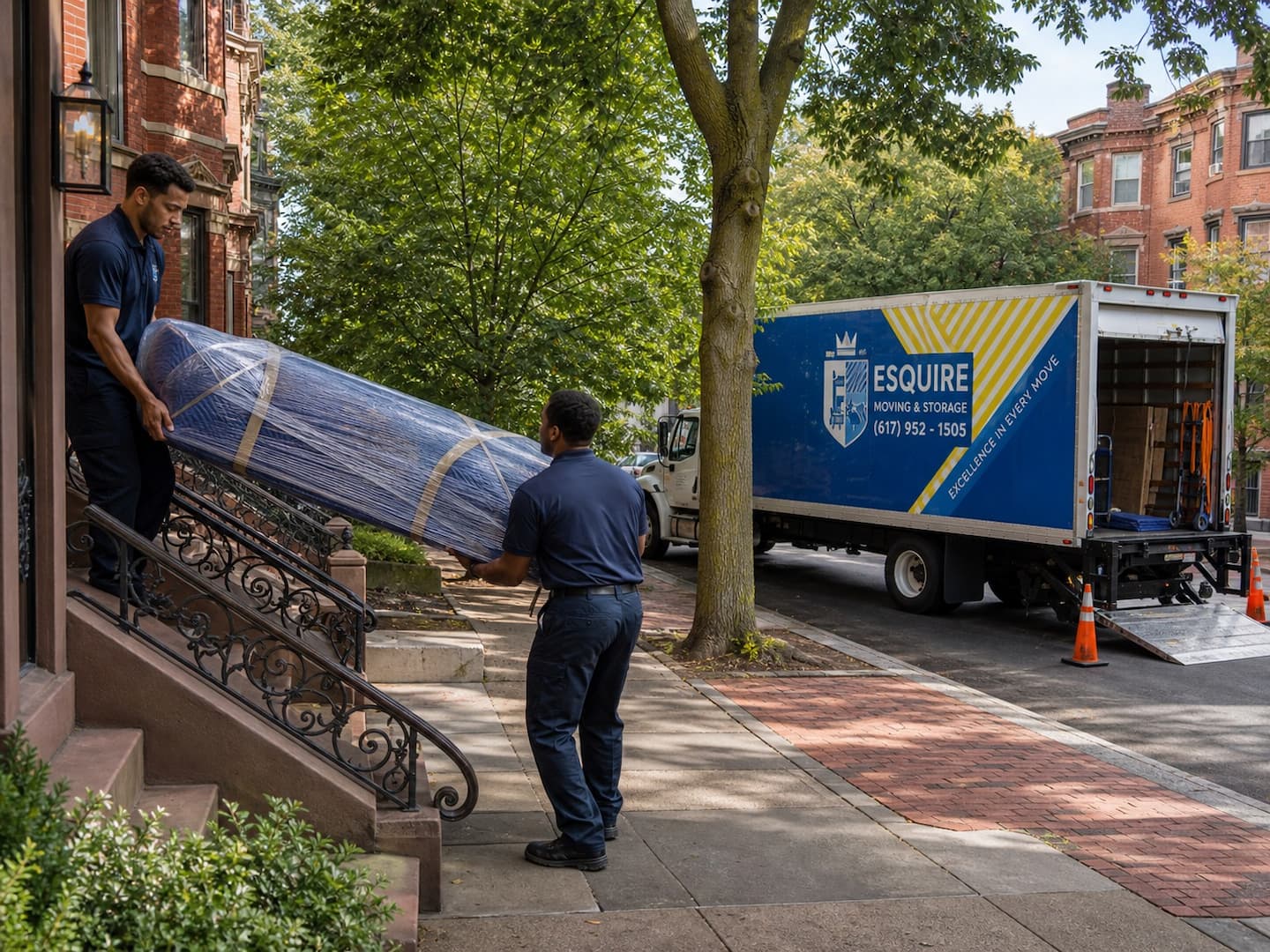
Share elevator rules, stair counts, front-entry width, curb restrictions, and any required certificate-of-insurance wording.
Note driveway slope, garage clearance, fenced yards, basement exits, and the distance between the door and the loading area.
Narrow approaches, seasonal traffic, exterior steps, and older floor plans deserve an address-specific plan before moving day.
Long private drives, overhead branches, detached storage, gravel surfaces, and limited turnarounds can affect truck placement.
Send the hard parts early. Include photos or a short walkthrough of stairs, halls, parking, and unusually large pieces. The estimator can then build the quote around the move that will actually happen.
Mileage alone does not determine the move type. A shipment that stays inside Rhode Island is intrastate; a shipment delivered in another state is interstate.
Rhode Island's Division of Public Utilities and Carriers regulates for-hire property transportation between points within the state, including household goods. Review the mover's authority and the documents that apply before loading begins.
Read Rhode Island's consumer guidanceFederal rules apply when the shipment crosses state lines. Check the mover's USDOT information, request a written estimate based on an actual or virtual survey, and keep the federal rights booklet with your records.
Visit FMCSA Protect Your MoveCheck the inventory, requested services, access assumptions, estimate type, and payment terms.
Confirm the pickup and delivery information, selected services, and any agreed schedule details.
Read the contract before signing and keep your copy outside the shipment for the entire move.
Keep the item record and your selected level of liability protection with receipts and photographs.
A long-distance shipment spends more time in transit than a local load. Careful preparation reduces shifting, keeps cartons easy to identify, and makes delivery more orderly.

Good loading starts before the crew opens the truck. These four decisions keep the pickup moving without rushing the parts that need care.
Moving from Providence? Street occupancy and temporary no-parking needs depend on the exact location and date. Providence handles right-of-way and emergency no-parking requests through its Traffic Permit process. Check the city's current permitting guidance before moving day.
Distance matters, but it is only one part of the price. Shipment size, access, dates, labor, requested services, and the transportation plan all belong in the conversation.
Begin with both addresses and an honest inventory. Add anything that changes crew time, materials, truck access, or handling.
The truck capacity is reserved for one customer. Ask how pickup and delivery timing will be scheduled, who will provide updates, and whether any transfer is planned.
Your belongings travel with other identified shipments. Confirm the delivery window, how each load is separated, and how timing may change along the route.
A delivery window is not the same as a single appointment. Before booking, ask how the window is defined, when the driver will call, what could affect timing, and what the destination property requires for access.
Choose a destination to review a more specific route. Availability, timing, access, and service options are confirmed for the actual addresses and move date.
Shorter interstate trips still need accurate building access, parking, and delivery coordination at both ends.
For longer north-to-south moves, confirm the complete inventory, destination access, storage needs, and expected delivery window.
Cross-country shipments benefit from careful packing, clear identification, and a realistic delivery plan for the destination.
Do not see the destination you need? Send both addresses and the preferred dates. Esquire can confirm whether the route and requested services are available.
Clear answers begin with the actual addresses, inventory, access, and service plan. These are useful points to settle before moving day.
Request a moving quoteA household-goods move is interstate when the shipment crosses a state line. A move that starts and ends inside Rhode Island is intrastate, even if it travels across much of the state. The pickup and delivery addresses determine the category.
Start once the addresses and preferred dates are reasonably firm. Several weeks gives you time to compare written estimates, review documents, and arrange building or street access. Summer, month-end dates, and properties with limited elevator or parking availability may need more lead time.
Pricing can reflect shipment size or weight, mileage, labor, access at both homes, dates, packing, storage, specialty handling, extra stops, and the transportation service selected. A complete inventory and accurate access details make the estimate more useful.
They can. Curb restrictions, right-of-way permits, elevator reservations, loading hours, floor protection, and certificate-of-insurance wording may affect the pickup plan. Check the rules for the exact address and date, then send the relevant instructions to the estimator.
That depends on the service booked. Dedicated transportation reserves truck capacity for one customer, while consolidated transportation uses shared capacity for separately identified shipments. Ask about transfers, shipment identification, arrival updates, and the delivery window.
These services may be requested and should be listed in the written estimate when included. Discuss full or partial packing, storage between addresses, furniture disassembly, and reassembly of pieces taken apart by the crew. Confirm materials, charges, and storage terms before booking.
Keep the written estimate, order for service, bill of lading, inventory, valuation selection, receipts, and mover contact information outside the shipment. Review completed documents before signing and retain copies through delivery and any claim.
Share the details that matter at pickup and delivery. Esquire can use them to prepare a clearer service plan and moving estimate.
Exact addresses and an accurate home size provide the best starting point.