Survey the move
Review both addresses, the inventory, access, preferred dates, and requested services. Photos or a video walkthrough can help with bulky items and tight spaces.




A long-distance move from Chicago begins well before the truck reaches the interstate. The crew may need to work around a reserved elevator, loading-dock hours, or limited curb space before loading can start. Esquire plans the pickup and the interstate trip together.
A River North condo, a Lakeview walk-up, and a suburban home may all be headed out of state, but each requires a different loading plan. Elevator reservations, alley width, and curb restrictions should be settled before the crew arrives.
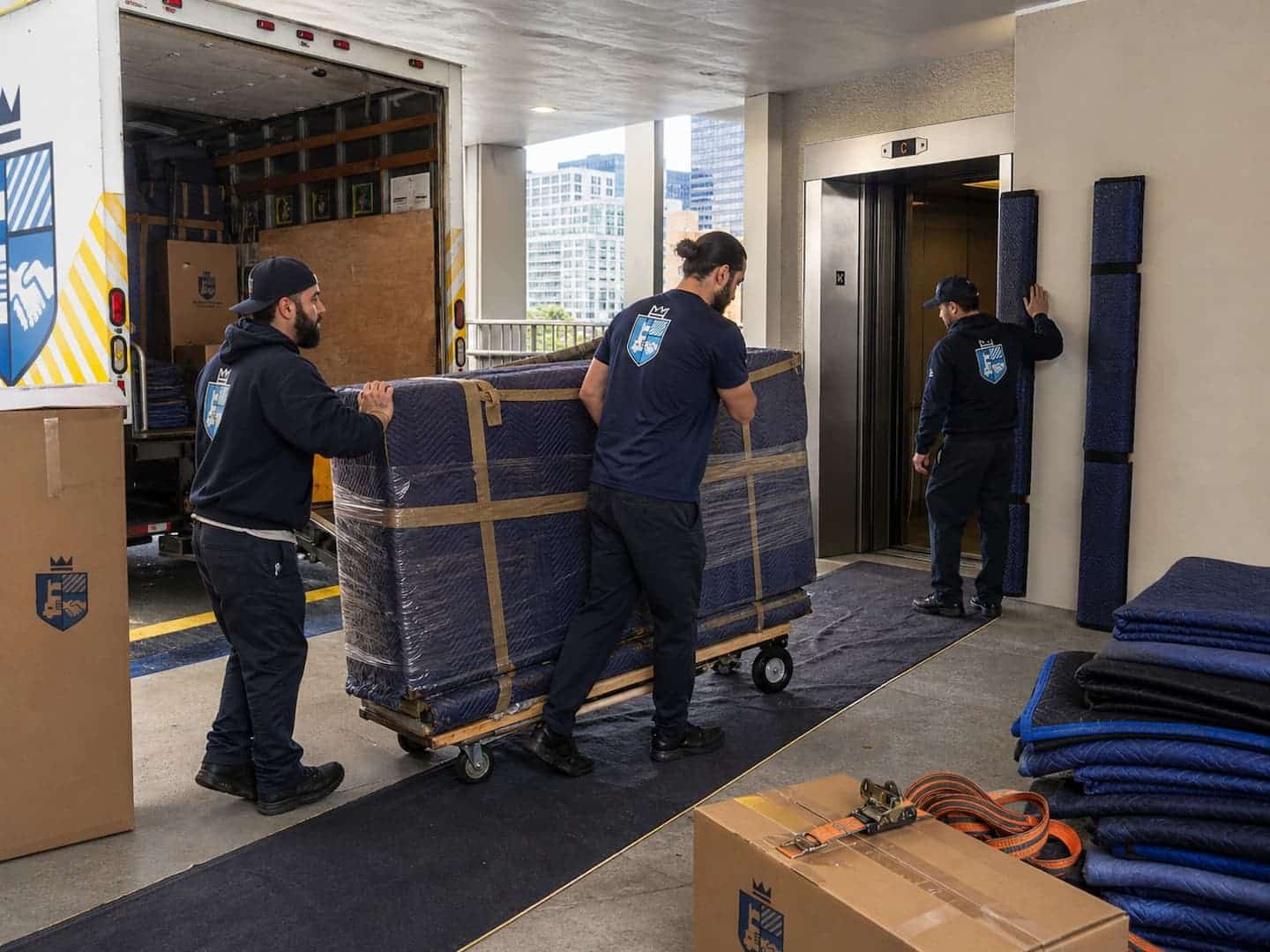
Downtown buildings often set limited moving hours and specific requirements for movers. In Logan Square or elsewhere in Chicagoland, the main concern may be whether the truck can enter the alley or park close enough to avoid a long carry.
Before you request a quote: ask the building manager for the full move-in or move-out packet, then send it to us. COI wording, elevator hours, and loading-dock rules can vary even between neighboring buildings.
A clear process makes it easier to know what happens next and what information the crew needs at each stage.
Review both addresses, the inventory, access, preferred dates, and requested services. Photos or a video walkthrough can help with bulky items and tight spaces.
Check the services, estimate type, valuation option, payment terms, and whether your shipment will travel by direct or consolidated service.
The crew labels boxes, protects furniture, records the inventory, and secures the load for interstate travel.
Use the agreed point of contact for updates. The pickup date and delivery window should appear as separate parts of the schedule.
Check off items as they are unloaded, direct boxes to the correct rooms, and confirm any included furniture placement or reassembly before the crew leaves.
Do not pack your written estimate, order for service, bill of lading, inventory, valuation selection, or contact details. Read each completed document before signing and keep copies through final delivery.
Some customers want the whole home packed. Others need help only with dishes, artwork, or furniture that has to be taken apart. Your estimate should clearly state what the crew will handle.

Choose a whole-home pack, selected rooms, or only the fragile items. When applicable, the estimate should list packing labor and materials separately.
Moving blankets, stretch wrap, disassembly, labeled parts bags, and careful handling protect furniture in the building and on the road.
Closing dates do not always line up. Storage can bridge that gap, but ask about handling, access, the planned duration, and the charge for final delivery before approving the move.
Artwork, antiques, pianos, gym equipment, and unusually large pieces may need measurements, crating, special equipment, or a separate handling plan. Tell us about them during the inventory review.
Mileage is only one part of the price. Shipment size, labor, access at both addresses, selected services, dates, and available truck space can also affect your estimate.
Start with an accurate inventory. Make sure the estimate includes anything that adds labor, packing materials, special handling, or another stop. If the list changes, request a written revision before moving day.
Depending on the service offered, a direct or dedicated move may reduce stops and simplify scheduling. Confirm how the mover defines the service and which pickup and delivery dates appear in the agreement.
Consolidated service can work well for a smaller shipment. Because the truck serves more than one customer, the delivery window may be wider. Ask how the crew labels your shipment, whether transfers are planned, and when you will receive updates.
A delivery window is not a guaranteed appointment unless the contract says otherwise. Distance, weather, legal driving limits, scheduled stops, and access at the destination can affect timing. Before choosing an interstate mover, review FMCSA Protect Your Move.
Select your destination to learn more about the route. If it is not listed, use the exact pickup and delivery ZIP codes when you request a quote.
These destinations are closer than the East or West Coast, but building access and the delivery schedule still need careful planning.
Many buildings in this region have their own elevator, loading-dock, curb, or COI requirements. Share the rules for both addresses before moving day.
A downtown apartment and a suburban home require different delivery plans. Share the destination address and access details when you request an estimate.
Longer trips make the type of service and delivery window especially important. Mention gated access, storage, and extra stops before the estimate is prepared.
Don't see your destination? Esquire serves many other interstate routes. Submit the pickup and delivery ZIP codes, along with any storage, elevator, gated-access, or extra-stop requirements.
Find answers about estimates, scheduling, building access, and interstate delivery.
Request a moving quoteAn interstate move crosses a state line and falls under federal household-goods rules. A move that stays within Illinois is intrastate, even if it covers a long distance, and may follow different state rules and pricing requirements. Ask the mover which category applies; mileage alone does not determine it.
Begin as soon as the addresses and dates are reasonably firm. Several weeks of lead time gives you room to compare written estimates and arrange building access. Summer dates, month-end weekends, and properties with limited freight-elevator appointments may need more notice. Short-notice availability depends on crew and route capacity.
Possibly. Many managed buildings require a certificate of insurance, a reserved service elevator, or a loading-dock appointment. Parking a moving truck in the public way may also require a city permit. Get the property's move packet and share any curb or alley restrictions before the estimate is prepared.
Pricing depends on the shipment size or weight, distance, labor, access at both addresses, requested dates, packing, storage, specialty handling, extra stops, and the type of service. A useful estimate starts with a complete inventory and states whether it is binding or non-binding.
It depends on the service you book. A dedicated move reserves truck capacity for one customer, while a consolidated move shares space with other shipments. Ask whether transfers are planned, how the crew will identify your items, and how the service affects the delivery window. Make sure the agreement reflects the answer.
Yes, when those services are available and listed in the estimate. You may request full or partial packing, storage between addresses, and reassembly for furniture the crew took apart. Confirm the materials, handling charges, storage terms, and what is included at final delivery before signing.
Share the pickup and delivery addresses, an accurate inventory, and any building requirements. Tell us if you need packing or storage, and we can prepare a quote for your move.
Exact addresses provide the most accurate starting point.