



Moving from Alexandria, Virginia
Long-Distance Movers in Alexandria, VA
A move from an Old Town row house, a Carlyle apartment, a Del Ray home, or a West End condo begins with the details at your door. Esquire plans for what you are moving, parking and building access, the help you need with packing, and the trip to your new home.
Detailed home inventory
Parking and building access
Packing and storage choices
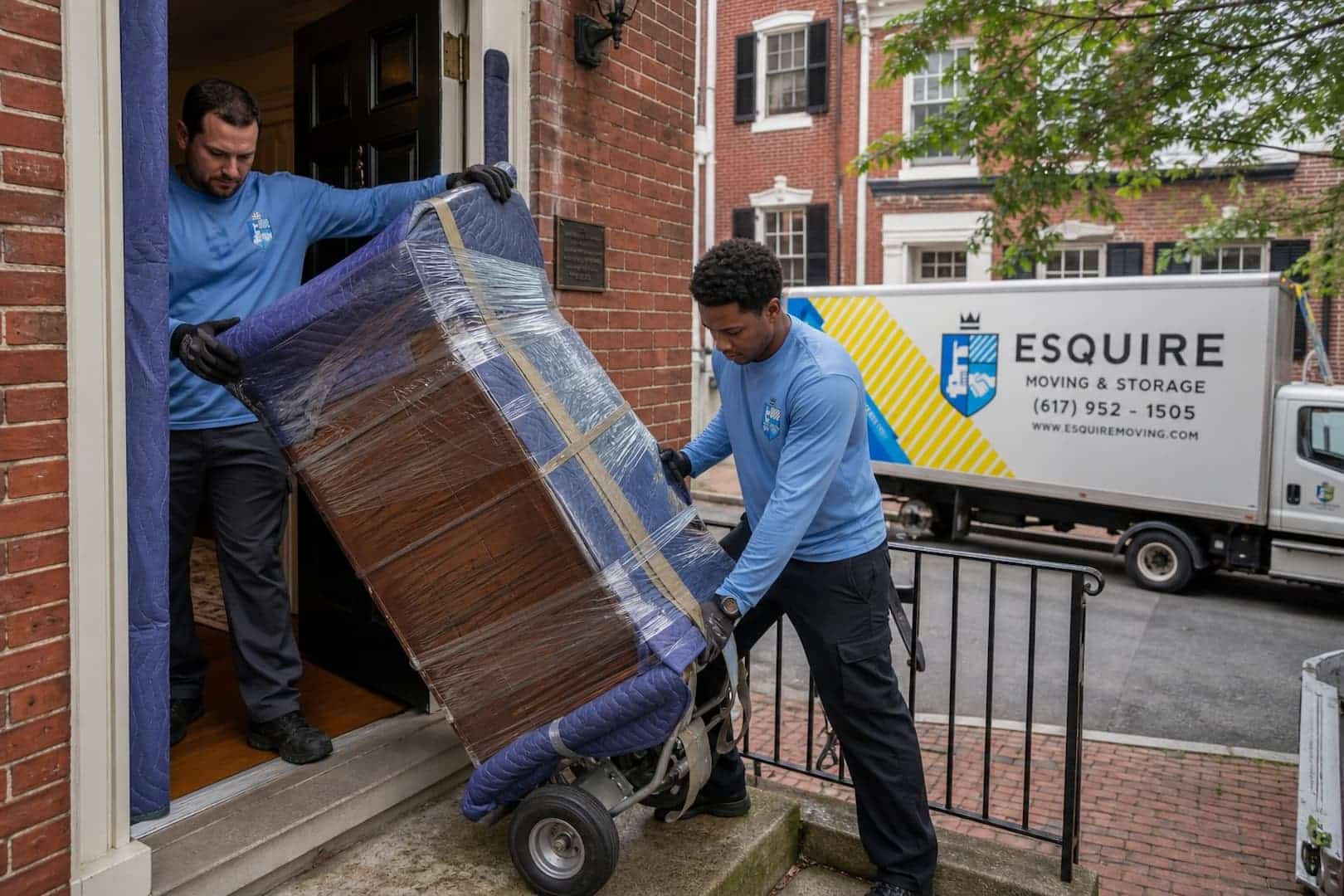
Alexandria access planning
Plan the path from your front door to the truck
In Alexandria, getting furniture from the home to the truck can take as much planning as the drive itself. We look at narrow townhouse stairs, elevator reservations, loading docks, and long carries before moving day. If your building requires a certificate of insurance, let us know so it can be ready on time.
Those details help us choose the right crew and equipment and find a safe place for the truck to load. If you need space on a public street, the City of Alexandria accepts temporary reserved parking applications for moving and loading. The city publishes current deadlines, fees, and sign requirements.
Check the City of Alexandria's current temporary reserved parking instructions before you apply. Once the space is approved, share the location and approved hours with your move coordinator.
Street, driveway, or dock access
Stairs and elevator windows
Certificate of insurance requirements
Oversized or unusually heavy items
Narrow entries, compact stairs, metered curb space, and busy sidewalks can affect where and how the crew loads.
Many apartment and condo buildings require a reserved elevator, a dock appointment, and a certificate of insurance.
Tell us about porch steps, driveway width, street parking, and the easiest approach for the truck.
A high-rise, garden apartment, and townhouse can have very different loading access. The exact address helps us plan.
How your move comes together
What to expect from the first walkthrough to delivery
Before moving day, you should know what the crew is packing, when the truck will arrive, and what to expect at your new home. We confirm those details with you in advance.
1
Walk through your home
We review each room, closets and storage areas, fragile belongings, and furniture that may need to come apart. Photos can help with unusual or oversized pieces.
2
Review the details
Before you book, check both addresses, the dates, packing services, storage, valuation, payment terms, and the expected delivery window.
3
Pack, protect, and load
The crew wraps furniture, protects floors and doorways, checks items against the inventory, and loads the truck carefully.
4
Receive your belongings
Before arrival, confirm parking and building access at the new home. At delivery, check off your items and note any damage or missing pieces on the paperwork.
Packing, storage, and extra help
Choose the moving help that fits your home
Decide how much you want to do yourself. Esquire can pack the whole home or step in only for rooms, furniture, and belongings that need more time or care.
Full packing covers the entire home. With partial packing, you choose the rooms or fragile belongings that need help.
The crew can wrap furniture, protect floors and doorways, and take apart items that cannot move safely in one piece.
Ask which items can be unpacked or reassembled at your new home and whether packing debris can be removed.
If your new home is not ready, ask about storage, access to your belongings, and the cost of moving everything into storage and out again.
Show us artwork, antiques, marble, instruments, oversized fitness equipment, safes, and other heavy or delicate pieces during the walkthrough. Some items may need custom packing, extra movers, or special equipment.
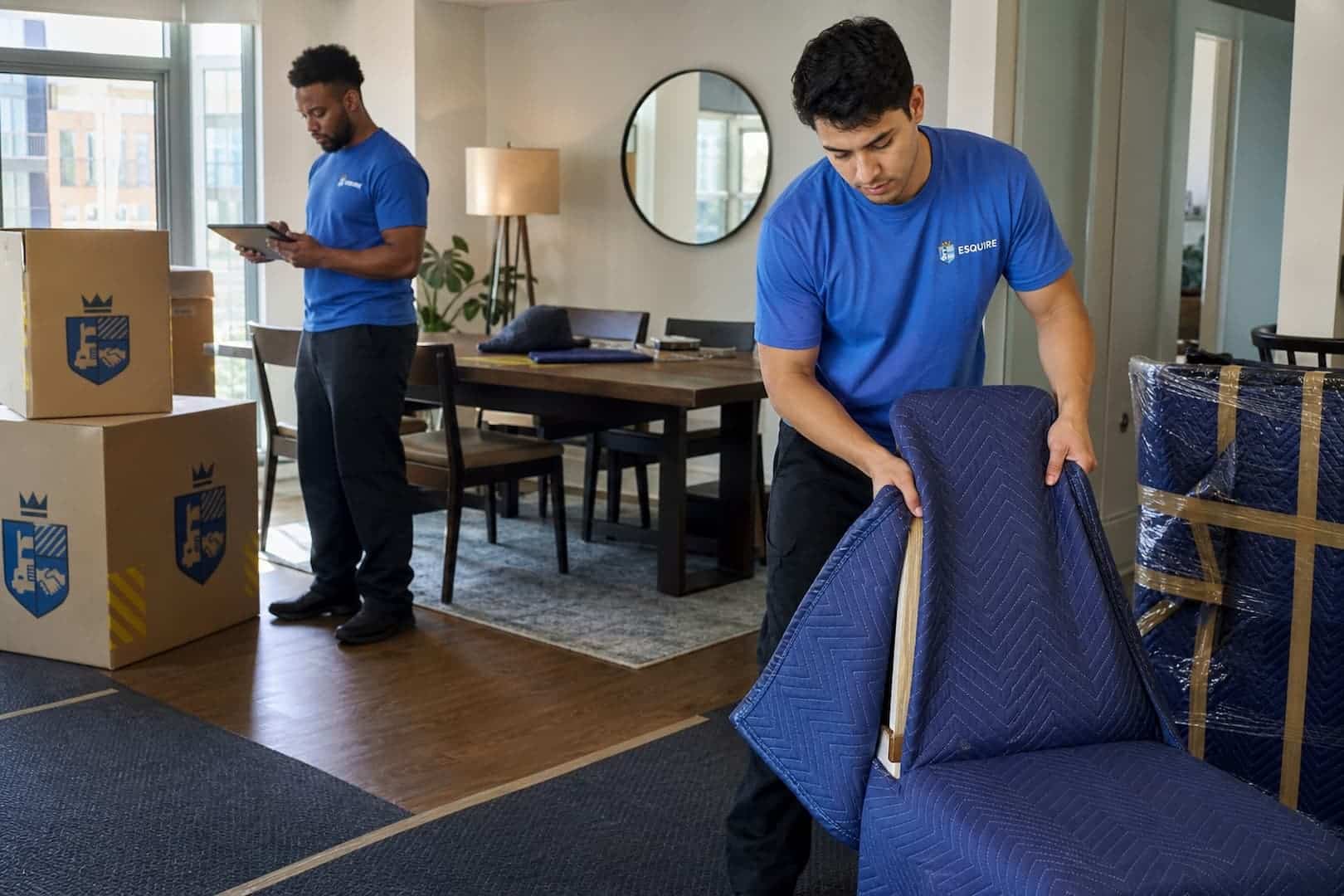
What affects the price
What shapes the cost of a long-distance move from Alexandria
Distance matters, but it is only part of the price. We also look at the amount of furniture and boxes, access at both homes, and the services you choose. That is why we ask for an inventory instead of relying on bedroom count alone.
Get my moving quoteFurniture, boxes, storage-area contents, and unusually heavy or delicate pieces all affect the quote.
Stairs, elevators, the walk to the truck, parking restrictions, and extra stops can add time to the move.
Your quote should list any packing materials, custom crating, furniture disassembly, unpacking, or other help you request.
Availability can change with the season, your preferred dates, and how much notice you can give.
If you need storage, a smaller shuttle truck, an extra stop, or a second delivery, make sure each charge is explained.
Valuation sets the mover's responsibility if belongings are lost or damaged. Compare the available options and their cost.
Before you approve the estimate: make sure the inventory, addresses, access details, services, valuation choice, payment schedule, and delivery window match what you discussed. If anything is missing, have it added before you sign.
Interstate paperwork in plain English
Five moving documents and terms to review before moving day
The Federal Motor Carrier Safety Administration's Protect Your Move guide explains interstate estimates, valuation, paperwork, and complaints.
Check whether it is binding, non-binding, or binding not-to-exceed. Make sure it lists the inventory and services you requested.
This records the requested work. Check the addresses, dates, services, and contact information.
Interstate movers must offer Full Value Protection and Released Value. Read what each option covers, what it costs, and how claims work.
This is the transportation contract. Keep your copy and do not sign incomplete or blank documents.
A window is a range unless the contract states otherwise. Plan essentials for the time between pickup and delivery.
Before you book
Alexandria long-distance moving FAQ
Here are answers to the questions customers often ask while planning a move from Alexandria.
Request a quoteHow early should I book long-distance movers in Alexandria, VA?
Contact movers as soon as your addresses and preferred dates are fairly certain. A few weeks' notice works for many moves, but summer dates, month-end moves, elevator reservations, and firm closing dates can fill sooner. If you are on a short timeline, ask about availability.
Do I need reserved parking for a moving truck in Alexandria?
You may need reserved space if the truck will load from a public street. The City of Alexandria accepts temporary reserved parking applications for moving and loading, with current deadlines, space limits, sign rules, and fees. Private properties and managed buildings have their own requirements, so check with the property manager as well.
Can Esquire pack only fragile items or selected rooms?
Yes. Partial packing is useful when you want to box most belongings yourself but need help with a kitchen, artwork, mirrors, antiques, or other fragile pieces. Tell us which rooms or items you want packed so the estimate includes the right labor and materials.
How is the cost of a long-distance move from Alexandria calculated?
Distance is one factor. The quote can also depend on how much you are moving, access at both homes, packing, storage, extra stops, heavy or delicate items, valuation, and your dates. A complete inventory usually produces a more accurate quote than bedroom count alone.
What is the difference between valuation and moving insurance?
Valuation sets how much responsibility the mover accepts if belongings are lost or damaged; it is not an insurance policy. For an interstate move, compare Full Value Protection and Released Value. You can also ask your insurer whether your homeowners or renters policy covers belongings in transit.
What should I keep with me during an interstate move?
Keep identification, medication, keys, moving documents, chargers, a change of clothes, and anything you will need before delivery with you. Carry personal valuables and irreplaceable records yourself, and do not pack hazardous or prohibited materials for the truck.
Ready to plan your move?
Request an Alexandria long-distance moving quote
Tell us where you are moving, your preferred dates, what is coming with you, and what access is like at both homes. We will use those details to prepare a clearer quote and discuss packing, storage, pickup, and delivery.
Planning for access at your Alexandria home
A quote based on what you are moving
Packing and storage choices
Clear pickup and delivery details