First Florida stops
≈ 932 miNew York City to Jacksonville is the shortest of the four reference routes shown here.
Jacksonville · St. Augustine · Gainesville · Tallahassee




New York to Florida interstate moving
Florida is not one delivery point. Esquire Moving plans the pickup, protection, transportation, and arrival around your real addresses, whether you are leaving an NYC apartment for a Miami condo, moving from Long Island to the Gulf Coast, or relocating from elsewhere in New York to a Florida home.
Share both addresses, move size, date, and any packing, storage, or building requirements.
Prefer to talk first? Call (617) 952-1505
The destination sets the route
A Jacksonville delivery and a Miami delivery are separated by more than 300 road miles. For anyone moving from New York to Florida, that difference affects transportation, timing, and the way the final day is scheduled. These city-center figures are useful for early planning; your estimate should use the complete addresses.
New York City to Jacksonville is the shortest of the four reference routes shown here.
Orlando-area deliveries can involve gated communities, apartment schedules, or new-home access.
The New York City to Tampa reference adds a cross-state leg after the main southbound corridor.
Miami and nearby coastal cities often add condo documents, loading bays, and reserved elevators.
Mileage examples begin in New York City and use city centers. An origin in Westchester, Long Island, Albany, Rochester, Syracuse, or another part of New York will produce a different route. Traffic, road restrictions, weather, stops, and the truck-safe route also affect actual mileage.
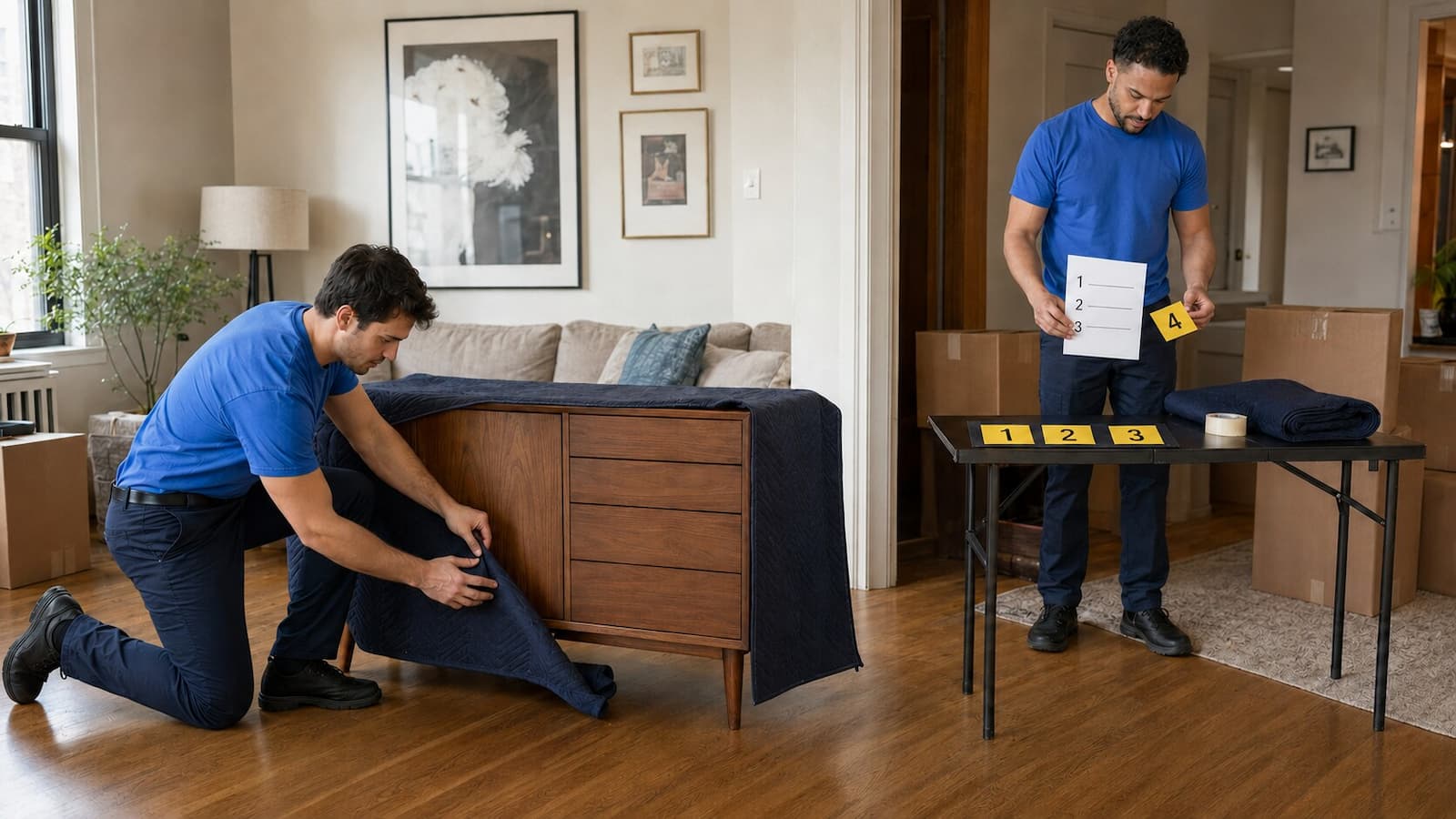
Build the New York pickup file
New York access is rarely captured by a ZIP code. A fourth-floor walk-up, a Manhattan service entrance, a Brooklyn brownstone, and a suburban driveway demand different crew time and equipment. Put the property facts in the move file while there is still time to act on them.
Ask about the certificate of insurance, mover approval deadline, service entrance, elevator reservation, and permitted move hours.
Share loading-zone conditions and posted restrictions. New York City treats a moving truck as a commercial vehicle for parking and standing rules.
List furniture and expected cartons. Flag safes, pianos, artwork, glass, exercise equipment, and anything that may need special preparation.
Note stairs, tight turns, long hallways, basement or attic items, narrow doors, and the distance from the truck to the home.
Match the schedule to the shipment
The number of days on the road does not tell the whole story. Delivery timing also depends on whether the shipment travels on a dedicated plan, shares capacity, or needs storage between addresses. The written estimate and order documents should make the arrangement understandable.
The truck and schedule are organized around one move or a tightly defined route. This can reduce handling and narrow the delivery plan, but availability and price depend on shipment size, dates, and addresses.
Your household goods share truck capacity with compatible shipments. It may be economical for some moves, although the delivery window can be wider and the routing more complex.
A closing delay, renovation, lease gap, or association approval may prevent immediate delivery. The plan should account for storage, added handling, inventory control, and the final Florida appointment.
Public route guides commonly show a broad two-to-eight-day full-service window from New York to Florida. Treat that as background only. Your confirmed schedule depends on the actual destination, service type, shipment, loading time, traffic, weather, driver-hour rules, and written agreement.
Discuss My RouteMake Florida ready to receive
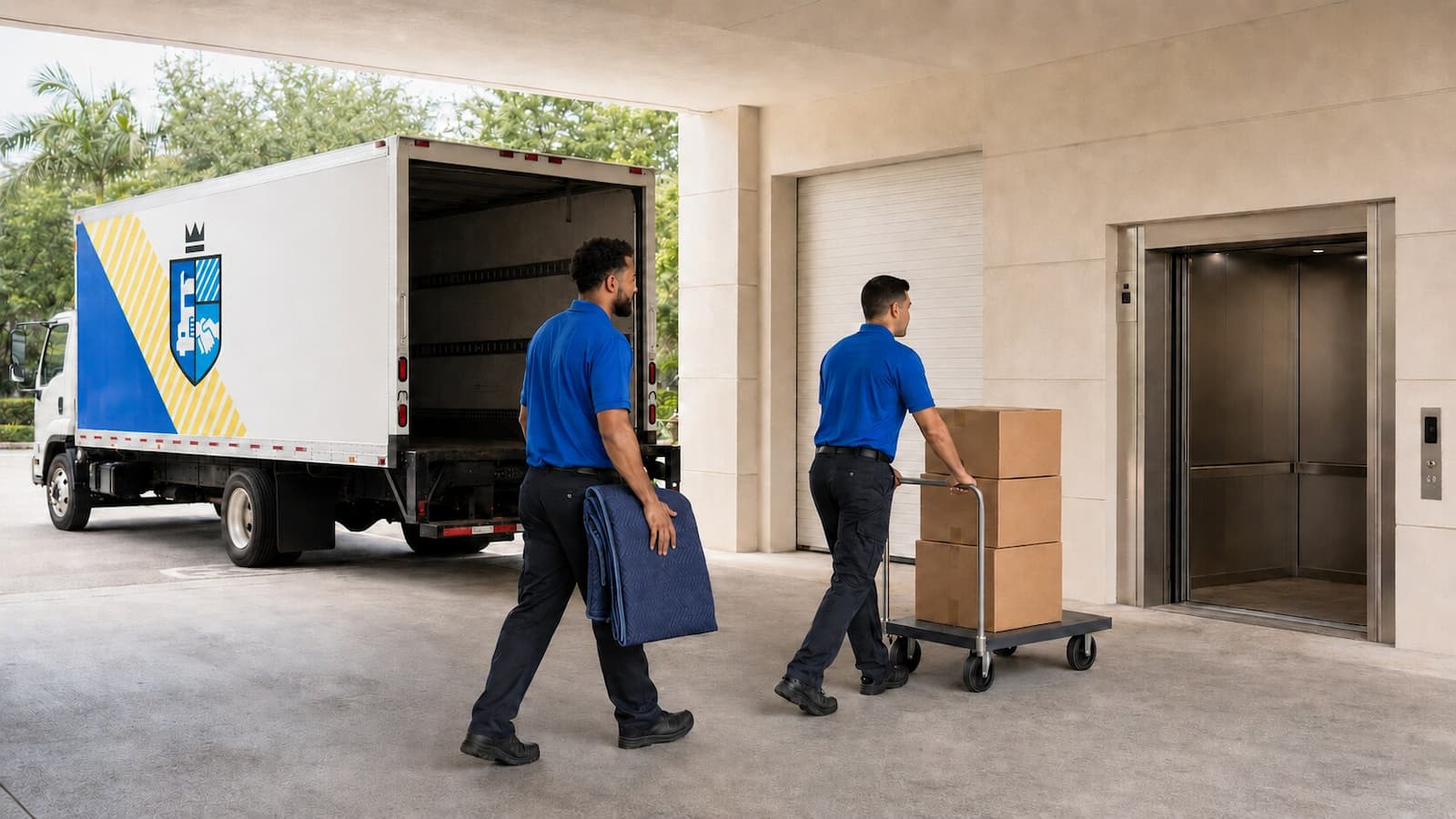
Heat and humidity matter, but the immediate concern is often access. A crew cannot use a freight elevator that was never reserved or enter a gated community without an approved vendor record. Confirm the arrival path, keep it shaded where possible, and avoid leaving wrapped furniture or cartons staged outdoors.
COI wording, management approval, loading bay, freight elevator, security check-in, and move deposit.
Vendor authorization, gate clearance, vehicle limits, community hours, and a local contact.
Street width, driveway grade, overhead clearance, floor protection, room labels, and assembly space.
Storage dates, inventory handling, release authorization, and a realistic redelivery appointment.
A quote you can compare
There is no honest statewide price that fits every move. Jacksonville and Miami differ in mileage; a studio and a four-bedroom home differ in shipment size; a curb-level pickup and a walk-up differ in labor. When comparing a New York to Florida moving company, look for an estimate that shows what was counted and what could change the charge.
Give the mover enough information to price the actual work rather than a generic route.
A low number is not useful if important work is absent or the terms are unclear.
For the strongest starting estimate, provide both complete addresses, an inventory or video walkthrough, building rules, the preferred date, and the services you want. Report material changes before loading so the documents and crew plan can be updated properly.
Build My EstimateOne route, five handoffs
Each stage should leave the next one with usable information. That matters on a long interstate route, where a missed access rule or an unlisted item can surface hundreds of miles later.
Document rooms, furniture, cartons, special items, access, dates, and requested services.
Confirm the inventory, estimate terms, valuation choice, transportation plan, and possible extras.
Prepare surfaces and furniture, verify the shipment, then load for stable interstate travel.
Use the communication and delivery process described for the selected service type.
Work through the approved Florida access path, room labels, reassembly scope, and final review.
Questions before booking
Use these answers to compare moving plans and spot the details that need an address-specific response.
Get a Route QuoteThe price depends on the New York origin, the Florida destination, shipment size, service date, packing, property access, transportation plan, special items, storage, and additional stops. An accurate written estimate should use an inventory and both complete addresses. Broad online averages can help with early budgeting, but they do not define the price of your move.
Using New York City as the origin, common road references range from about 932 miles to Jacksonville to roughly 1,276 miles to Miami. Orlando is around 1,080 miles and Tampa around 1,136 miles. Mileage changes when the move begins elsewhere in New York or ends in another Florida community.
Public full-service route guides often use a broad two-to-eight-day range, but a confirmed window depends on the exact cities, shipment, loading time, dedicated or consolidated service, traffic, weather, driver-hour rules, storage, and building access. Ask for pickup and delivery terms in writing.
Yes. The shipment crosses state lines, so federal household-goods requirements apply. Check the mover’s USDOT registration, read the FMCSA consumer materials, and review the written estimate, order documents, inventory, delivery terms, and valuation selection before booking.
Packing can be included according to the agreed scope. Options may cover the full home, selected rooms, kitchens, fragile pieces, furniture protection, cartons and materials, and disassembly or reassembly. Identify artwork, mirrors, glass, pianos, safes, and other unusual items during the survey.
Managed buildings commonly ask for a certificate of insurance and may require mover approval, reserved service access, a freight elevator appointment, security registration, protective materials, or a deposit. Requirements come from the individual property, so obtain the current instructions and exact COI wording directly from management.
Storage coordination may be available when a closing, lease, renovation, or building approval creates a gap. Ask where the shipment will be held, how it will be inventoried, what extra handling is involved, and how storage and final delivery are priced.
Keep identification, medication, keys, financial records, irreplaceable documents, jewelry, chargers, travel bags, and immediate-use supplies with you. Movers also restrict certain hazardous, flammable, perishable, or otherwise non-transportable items, so request the company’s current prohibited-items guidance before packing.
Start with the route you are actually moving
Complete addresses make the estimate more useful. Add the inventory, preferred date, property access, packing needs, special items, and any gap between pickup and delivery.
Send the route and move details. The team will follow up about scope, availability, and next steps.
Questions first? Call (617) 952-1505