Separate work from household packing
Use a clearly identified box for cables, adapters, and desk accessories. Pack it with the office inventory rather than mixing it with kitchen or bedroom items.





Esquire Moving helps with Avon house moves, apartment relocations, packing, and moving home-office furniture and equipment.
Avon brings residential neighborhoods and an industrial park together near Route 24. The road connection is useful, but the work at each end still comes down to the entrance, the furniture, and what needs to be ready first.
Tell us whether you are moving a household, an apartment, a small office, or a combination of living and working spaces. We can discuss loading, transport, packing, and storage as part of the estimate. You do not need to add every service to get help with the part that matters most.
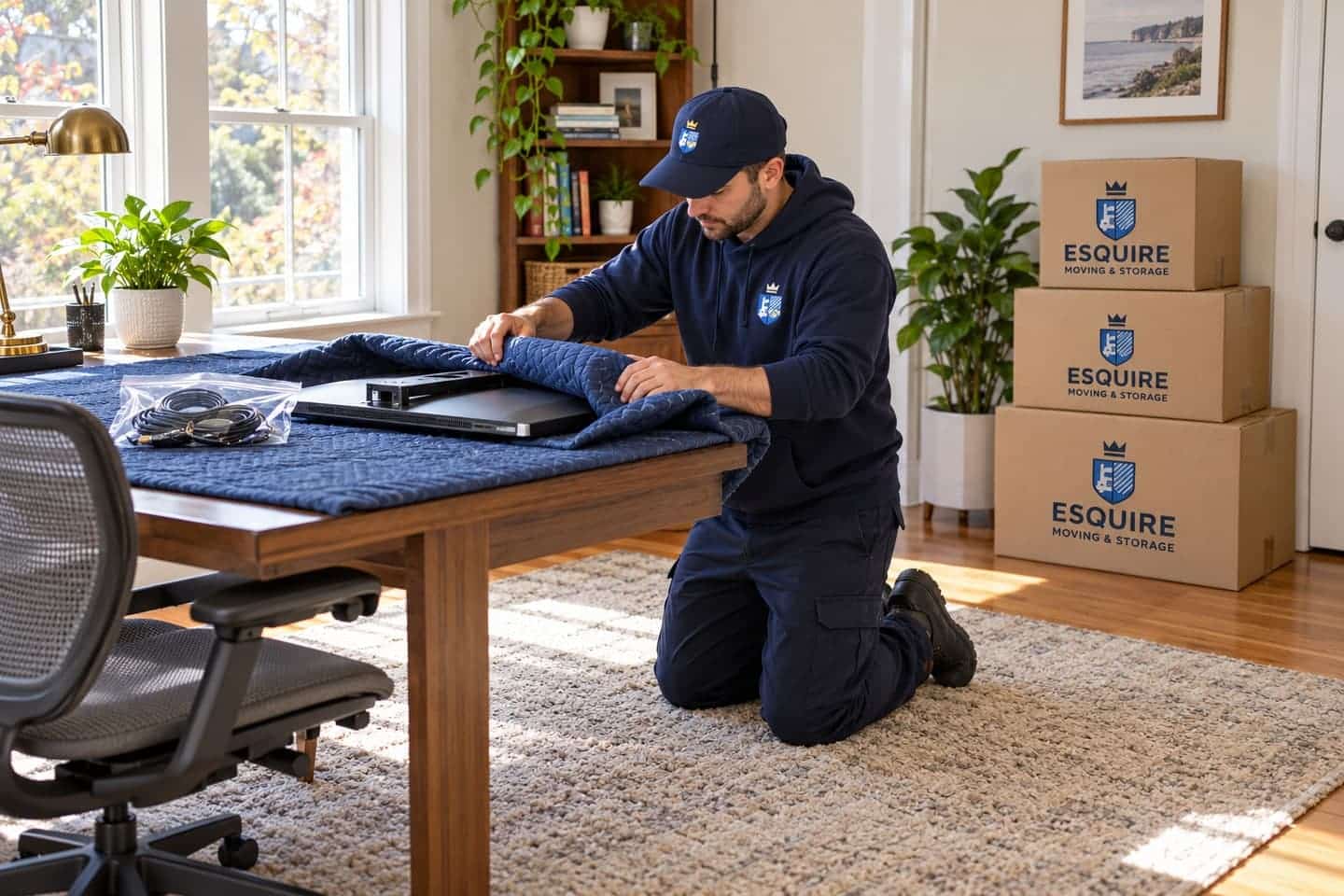
A home office often contains more than a desk and chair. Screens need protection, cable sets need to stay together, and confidential documents should not disappear into a general packing box.
Before packing, back up your files and photograph cable connections. Keep passwords, valuable documents, and the equipment you need during the move with you. Tell the crew which desk belongs in which room at the destination.
Explore packing help →Use a clearly identified box for cables, adapters, and desk accessories. Pack it with the office inventory rather than mixing it with kitchen or bedroom items.
Share its dimensions and whether it comes apart. An oversized desk that fits the current room may not fit through the next doorway in one piece.
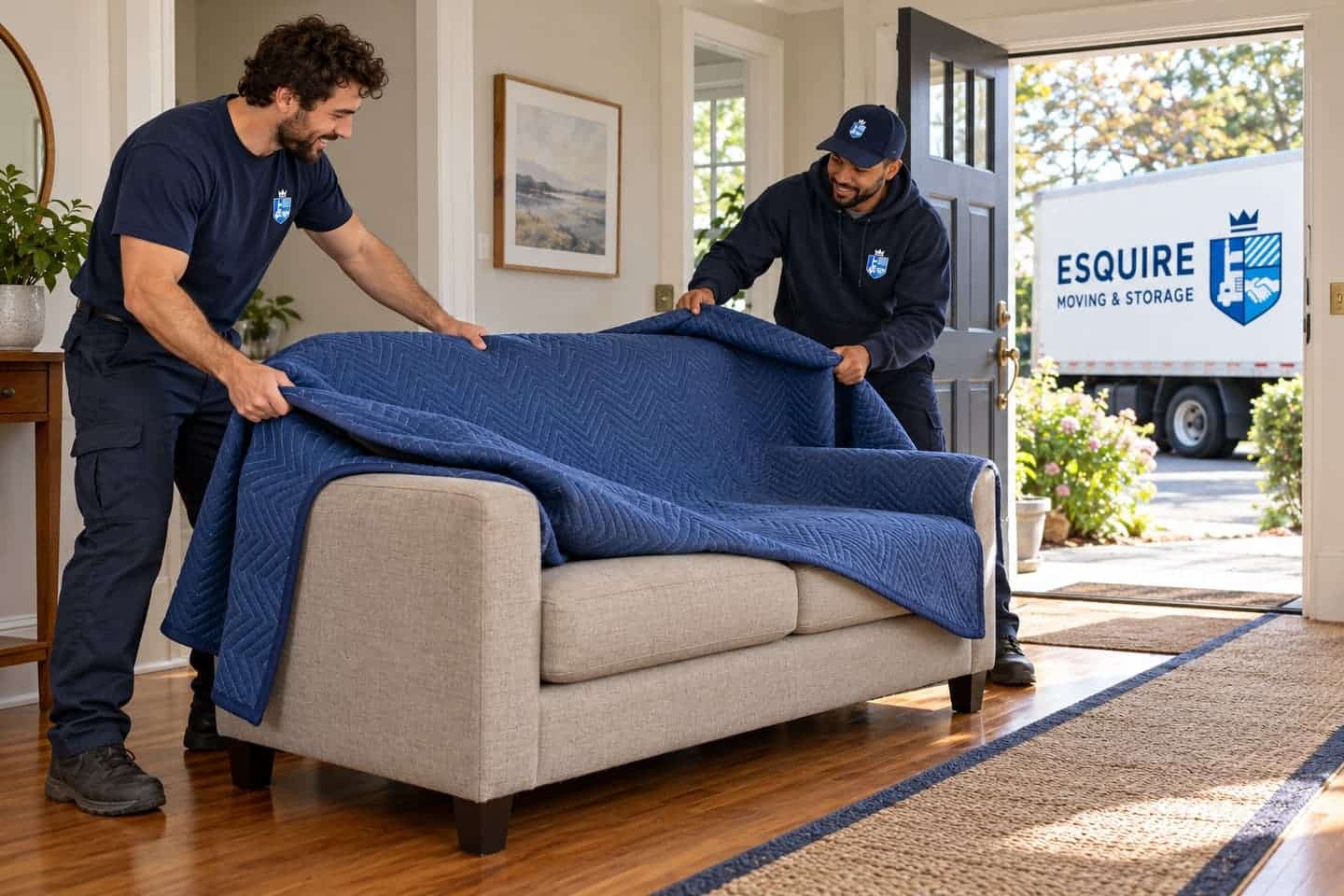
For a house, show us the driveway, exterior steps, and the door you expect the crew to use. A parked car, a low branch, or a tight turn can affect where a truck can safely stand. Photographs are helpful when the approach is not obvious from the address.
For an apartment, include the floor, stair turns, elevator availability, and any move-in rules. Ask management about the approved entrance and loading area. A reservation for an elevator is separate from permission to use a parking space.
Share the same details for the destination. A straightforward pickup does not tell us whether the delivery includes stairs, a long hallway, or furniture that needs to be taken apart.
Some customers want every box packed. Others need help with the kitchen, fragile pieces, or large furniture. Choose the packing scope during the estimate so the materials and working time can be planned.
Mark boxes by destination room and keep the contents manageable. Books and other heavy items belong in smaller cartons; fragile items need cushioning, not empty space.
Keep medication, keys, chargers, documents, and a first-night bag out of the loading area. Point out any furniture or boxes that are staying behind.
A useful quote reflects your inventory and access, not just the number of bedrooms. Share changes before the move, including extra stops or a different delivery address.
Include storage areas, patio pieces, and office equipment. Flag unusually heavy or delicate items so handling can be discussed before booking.
Tell us about stairs, elevators, parking, and the distance between the truck and each entrance. Building schedules may also limit the available loading window.
If a closing or lease date leaves a gap, ask about moving and storage. Separate anything you will need during that gap before it is packed.
A few practical answers before you request an estimate.
Yes. Describe the furniture, box count, floor, and access at both addresses. A smaller inventory can still include stairs, awkward furniture, or building restrictions that need to be allowed for.
Esquire offers local and long-distance moving. Include the destination city and state when requesting a quote, along with any required delivery dates. The route and delivery arrangements should be part of the written estimate.
Ask before moving day. Weight, construction, and the route through the property affect whether anything can remain inside. Remove valuables, loose objects, and anything that could spill or damage the furniture.
Send the building's requirements and management contact early. Include any wording, submission deadline, or elevator reservation instructions so the arrangements can be reviewed before your move.
Identify workstations, shared equipment, furniture to disassemble, and the rooms they will go to. Have your IT provider handle system shutdown and reconnection where needed, and keep sensitive records under your control.
That depends on the inventory and available access hours. Tell us how much packing you need and when the property must be empty. We will discuss a sequence that fits the scope rather than assume both tasks will fit into one visit.
Send the addresses, date, inventory, and any access instructions. We will review the work with you and prepare an estimate for the services you need.
Prefer to talk it through?
Call (617) 952-1505