



A room count is only a shortcut; a complete inventory is the stronger basis.
Massachusetts → California · Cross-country moving
Boston to San Francisco Movers for a Cross-Country Move That Lands Cleanly
Plan the shipment, price, pickup, coast-to-coast transportation, and San Francisco curb access as one connected job. Esquire builds the move around your inventory and both properties—not around a generic distance calculator.
Route pricingFrom $4,800Starting reference for qualifying moves; final pricing follows the documented scope.
ABOUT 3,100 ROAD MILES14–21 DAY ROUTE REFERENCEPACKING & STORAGE OPTIONS
Mileage, pricing, and timing are planning references. Your addresses, shipment, access, dates, services, and written agreement control the actual move.

Starting priceFrom $4,800For qualifying moves with a confirmed scope.
Route scaleAbout 3,100 milesExact mileage depends on both addresses and routing.
Timing reference14–21 daysConfirm the applicable delivery window in writing.
Move classInterstate household moveFederal consumer rules and documents apply.
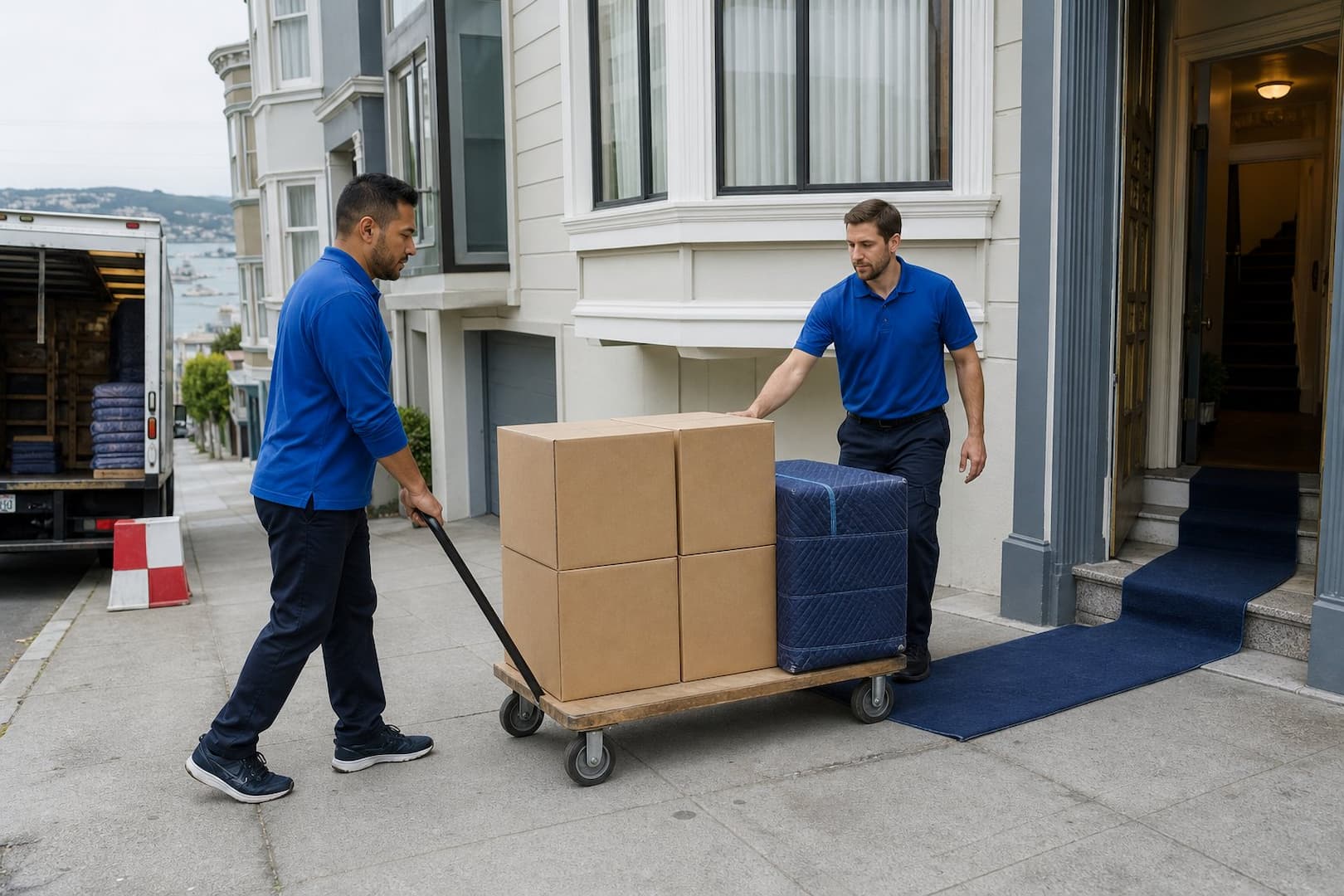
Plan the destination first
Solve San Francisco access before the truck leaves Massachusetts
For a move from Boston to San Francisco, the last few hundred feet can change the vehicle, crew time, equipment, and delivery sequence. Hills alone do not define the problem. The exact curb, posted restrictions, street grade, turn geometry, building window, and carry path do.
Curb positionCheck meters, colored zones, street cleaning, existing restrictions, required space, and whether temporary signage is appropriate.Verify early
Truck approachReview grade, width, turning room, overhead clearance, construction, and the safest direction of travel.Photo review
Building windowConfirm move hours, elevator reservation, service entrance, COI wording, deposits, protection rules, and onsite contact.Written slot
Carry pathMeasure tight doors and turns; identify stairs, long carries, fragile surfaces, and pieces that need disassembly.Map route
Fallback planIf the primary vehicle cannot safely or legally reach the door, discuss an approved alternative and its pricing before delivery.No surprises
Current SFMTA planning point
SFMTA provides temporary tow-away signage for moving vans and currently asks for at least five business days between a new application and enforcement. Posting lead times also differ for metered and unmetered spaces. Review the official temporary-signage guidance and confirm who is responsible before scheduling delivery.
Make the number auditable
A useful starting price has clear boundaries
A Boston to San Francisco moving company can quote the same city pair very differently because the underlying service may be different. When comparing movers from Boston to San Francisco, make sure every estimate describes the same shipment and the same responsibilities before choosing the lowest number.
Pickup access affects crew time and the loading sequence.
San Francisco access may require a different operating plan.
Separate included work from optional or customer-handled tasks.
Ask who moves the shipment and how the delivery window is communicated.
Availability and fixed building slots can influence the plan.
Compare like for like: inventory, access, services, estimate type, valuation, payment terms, pickup dates, and delivery window should all be visible—not hidden behind one headline price.
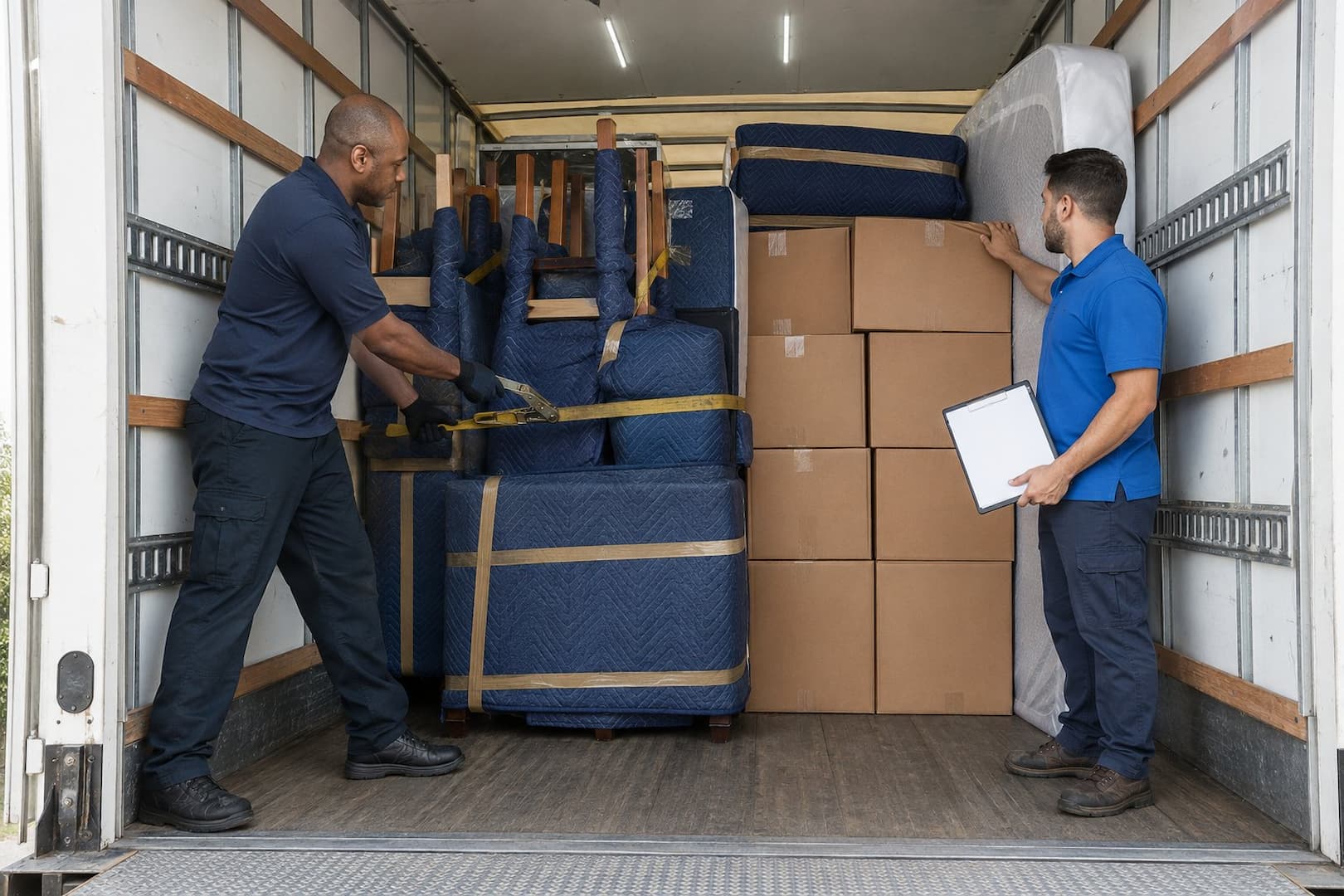
Protection is a system
Build the load for 3,100 miles—not a local afternoon
The objective is not simply to fit the shipment inside a truck. Furniture preparation, carton quality, load stability, identification, and unload order have to work together for a coast-to-coast move.
Surface layerUse clean pads, appropriate wrap, corner protection, mattress covers, and item-specific packing for exposed finishes.
Structure layerDisassemble only where useful, protect hardware, reinforce weak cartons, and keep heavy items from loading onto fragile pieces.
Movement layerBuild stable sections and use suitable securement so ordinary road motion does not become uncontrolled shifting.
Identity layerKeep room labels and shipment records useful for the San Francisco layout, special-item check, and delivery placement.
Packing yourself? Ask about carton standards, prohibited items, owner-packed limitations, fragile-item declarations, and the point when the inventory must be final.
Manage decisions, not highway hours
A coast-to-coast schedule works through five gates
A passenger-car drive time is not a household-goods delivery promise. Use the written pickup and delivery terms, then treat each checkpoint as a decision that must be complete before the next one.
Survey gate
Document rooms, furniture, carton estimate, special pieces, both addresses, access, and services.
Output: estimate-ready inventoryBooking gate
Review estimate type, price, valuation, pickup terms, delivery spread, payment, and cancellation terms.
Output: signed scopePickup gate
Finalize Boston parking, readiness, condition records, paperwork, owner-carried items, and loading contact.
Output: released shipmentTransit gate
Keep contact details current and use the agreed communication process for delivery updates or schedule changes.
Output: confirmed receiving planDelivery gate
Reconfirm San Francisco curb and building access, authorized receiver, payment method, placement priorities, and documents.
Output: controlled closeoutChoose the receiving path
Direct delivery and storage require different plans
Do not wait until the shipment is moving to decide whether the destination is ready. The estimate and schedule should reflect the path you expect to use.
Coordinate direct delivery
Use this path when the home, curb, building approvals, and receiving contact can support the confirmed delivery window.
- Delivery address verified
- Curb or loading plan approved
- Elevator and move hours confirmed
- Room-placement map prepared
Build a storage bridge
Use storage when a lease, closing, renovation, travel schedule, or property approval creates a gap between pickup and move-in.
- Storage period and location stated
- Access or retrieval rules understood
- Release notice and contact defined
- Final delivery priced and scheduled
Interstate paper trail
The documents should let you audit the move
Know who is responsible for the shipment, what work was priced, how delivery is defined, and which valuation option you selected. Keep accessible copies rather than packing them on the truck.
USDOT 2820253MC 940499MDPU 31796
Estimate
Charges and assumptions
Cost guidanceMatch the price to inventory, access, services, transportation, and potential additions.
Inventory
Shipment record
Consumer rightsCheck that the documented pieces and any condition process reflect what is actually moving.
Valuation
Liability choice
Valuation Q&AUnderstand Full Value Protection and Released Value before recording your selection.
Delivery
Window, contact, and payment
Delivery rulesKnow the agreed timing process, acceptable payment method, authorized receiver, and delivery paperwork.
Route questions
Boston to San Francisco moving FAQ
These answers support planning. Your written estimate and confirmed service agreement control the price, dates, and responsibilities for your shipment.
How much do Boston to San Francisco movers cost?
Esquire publishes a starting route price of $4,800 for qualifying moves. Your actual estimate depends on the inventory, date, both properties, stairs or elevators, curb access, packing, specialty handling, storage, transportation terms, valuation, and delivery requirements.
How far is Boston from San Francisco for a household move?
The road route is approximately 3,100 miles, depending on the exact origin, destination, and routing. Use mileage as a scale reference—not as a substitute for an inventory-based estimate or confirmed delivery plan.
How long does moving from Boston to San Francisco take?
Esquire's published route reference is 14–21 days. The applicable pickup and delivery terms may vary with shipment size, service model, dates, route conditions, weather, storage, access appointments, and availability. Confirm the actual window and communication process in writing.
Do I need to reserve parking for a moving truck in San Francisco?
The answer depends on the specific curb. If temporary tow-away space is needed, SFMTA provides signage for moving vans and currently asks for at least five business days to process new requests. Metered and unmetered spaces have different posting lead times. Check current SFMTA guidance and confirm responsibility with your property.
What if a large truck cannot reach my San Francisco address?
Share street and property details before the estimate is finalized. Grade, width, turns, overhead clearance, curb rules, construction, and building access may change the vehicle or handling plan. If an alternate vehicle, shuttle, or longer carry may be needed, document the arrangement and pricing before delivery.
Can packing or storage be included?
Yes. Full or partial packing, fragile-item preparation, furniture handling, and storage can be discussed as part of the move. Identify the specific rooms, items, dates, and delivery conditions so the written estimate shows what is included.
What should I keep with me during the cross-country move?
Carry identification, medications, keys, payment methods, important records, valuables, essential work devices, chargers, and enough clothing and household basics for the delivery window. Ask for the mover's prohibited-items policy before packing chemicals, fuels, perishables, plants, or other restricted goods.
Ready for a route-specific estimate?
Connect the shipment to a workable San Francisco delivery
Share enough detail to price the real move: inventory, both properties, service choices, preferred dates, and the destination access plan. The clearer the brief, the more useful the estimate.
ShipmentFurniture, cartons, specialty items, storage spaces.
Boston pickupParking, stairs, elevator, carry, readiness.
ServicesPacking, protection, assembly, storage, extra stops.
SF deliveryCurb, grade, building slot, receiver, placement.