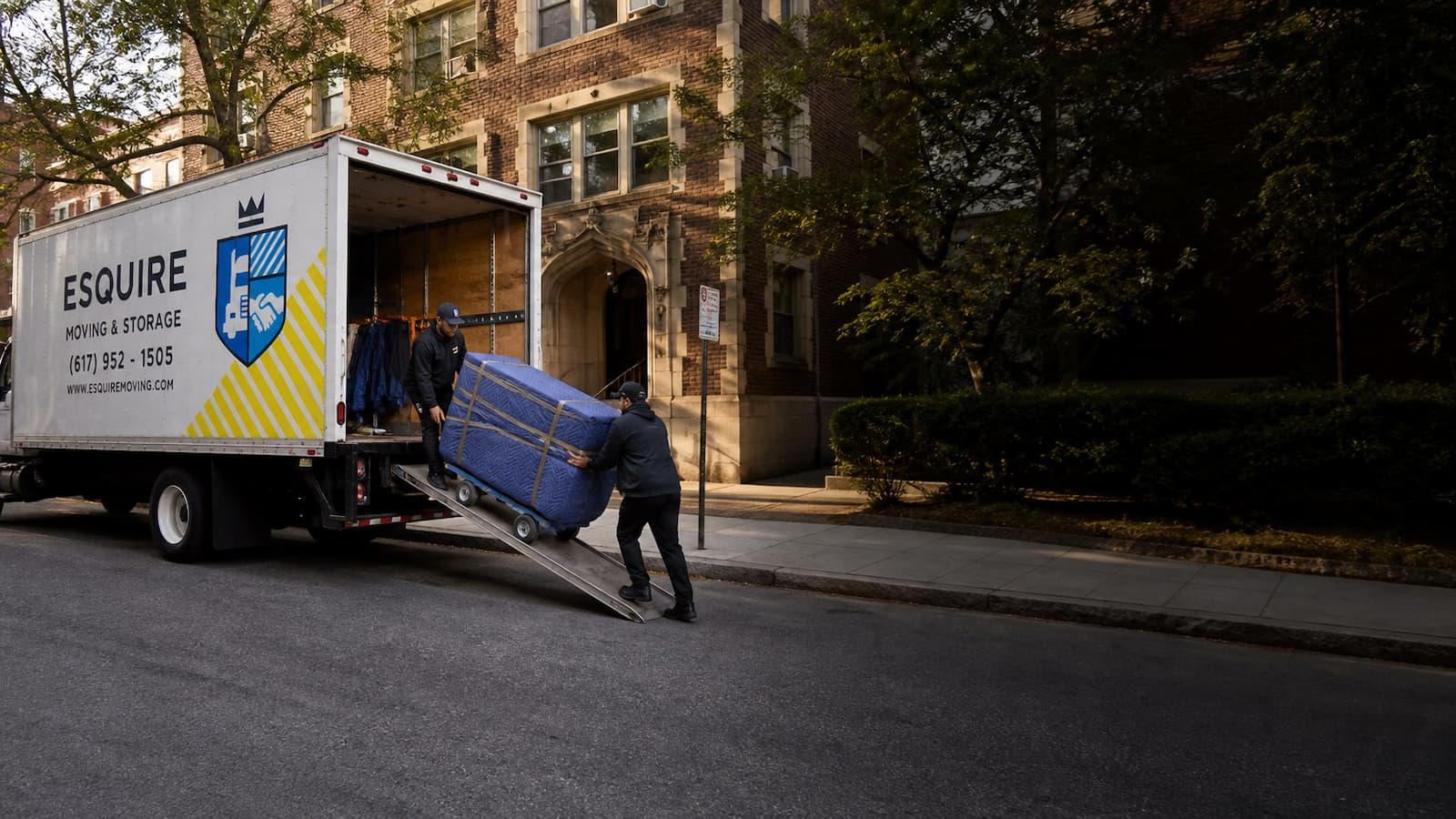
Boston Moving Permits: What They Are and Why They Matter
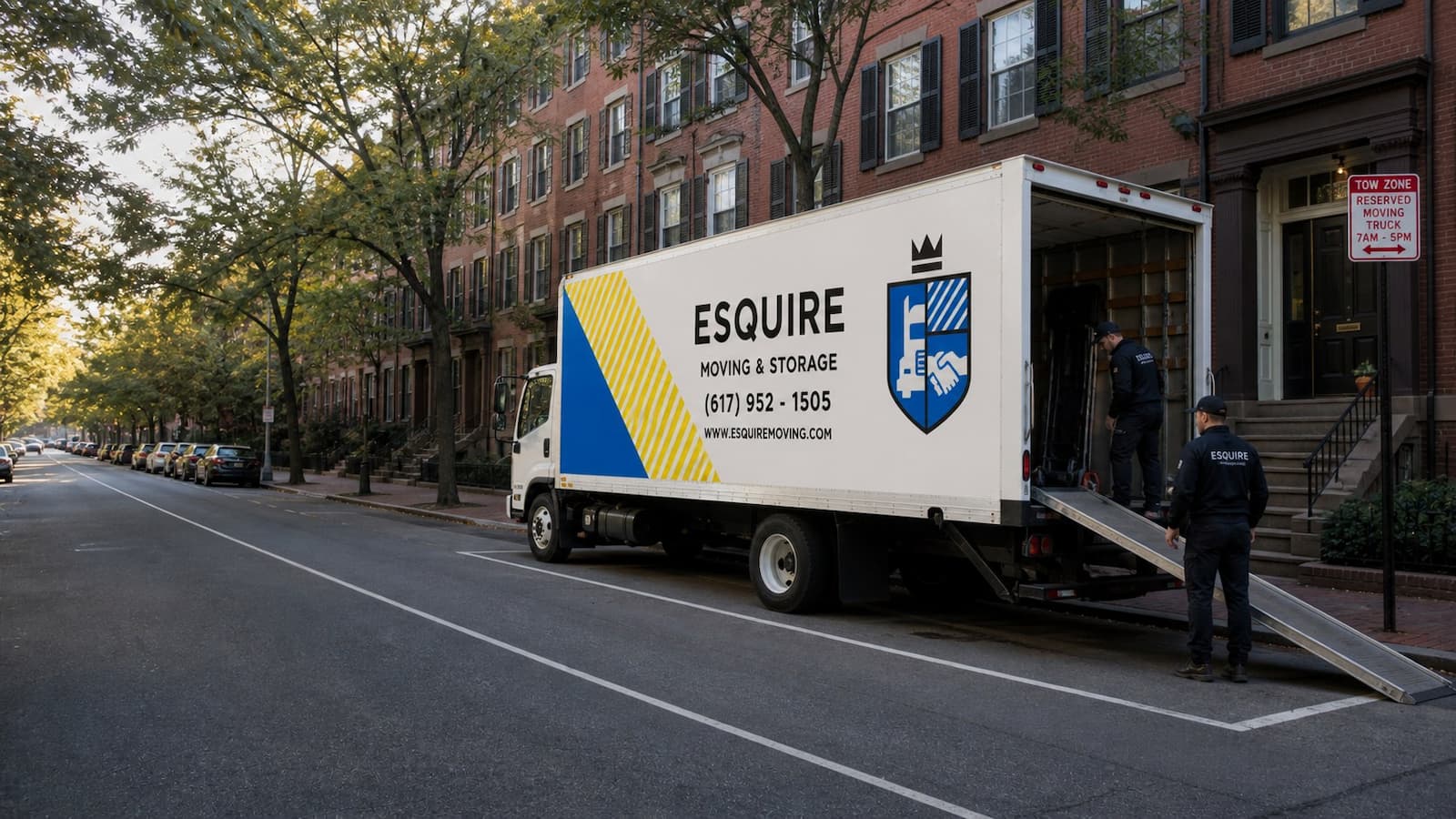
A Boston moving permit is not permission to move. It is a one-day parking reservation that helps keep curb space available for your moving truck. In a city with narrow streets, resident parking, metered spaces, busy apartment turnover, and limited curb access, that reserved space can make the difference between a smooth move and a long, expensive moving day.
The most important point is this: a Boston moving truck permit is not legally required for every move, but it is often strongly recommended when the truck needs to park on a public street. Without a reserved spot, the crew may have to park farther away, carry every box and furniture item over a longer distance, work around traffic, or wait for curb space to open.
This guide explains when you need a Boston moving permit, when you may not need one, how far ahead to apply, how much it usually costs, when to post signs, what restrictions still apply, and how to plan your move so parking does not create avoidable delays.
Jump to a section:
Quick Answer: Do You Need a Boston Moving Permit?
You should strongly consider a Boston moving truck permit if your moving truck needs to park on a public street in Boston and there is no private driveway, loading dock, garage, or building-controlled space available. The permit helps reserve curb space for the moving truck during the permitted time window.
Most Boston moves need permit planning when:
- the moving truck will park on a city-owned street,
- the street has resident parking, metered parking, or limited curb space,
- you are moving in a dense neighborhood such as Back Bay, Beacon Hill, North End, South End, Fenway, Allston, Mission Hill, Charlestown, or the Seaport,
- there is no driveway, private lot, loading dock, or reserved building space,
- the truck needs to be close to the entrance to avoid a long carry,
- you are moving into or out of a condo, apartment building, brownstone, or triple-decker with limited curb access,
- you are moving near month-end, late August, September 1, or another busy moving period.
You may not need a Boston moving truck permit if the truck can park legally on private property, in a dedicated loading dock, in a building-managed loading area, or in another approved space that does not require reserving public curb space. Even then, you should confirm the plan with your building, property manager, landlord, or moving coordinator before moving day.
If you are trying to estimate your total moving budget, remember that parking can affect labor time. For a broader cost breakdown, read: How Much Do Movers Cost in Boston?
What a Boston Moving Permit Actually Does
A Boston moving permit reserves parking space for a moving truck at a specific address on a specific moving date. It does not reserve an entire street. It does not remove every possible parking restriction. It does not replace building approval. It does not guarantee that your move will be fast by itself. It simply gives the moving truck a legal place to park, assuming the permit is valid for that location and the signs are posted correctly.
That one detail matters because moving time is heavily affected by truck-to-door distance. If the truck is close to the building, movers can load and unload efficiently. If the truck is around the corner, down the block, across traffic, or double-parked in a risky location, the move becomes slower and more stressful.
What the permit helps with
- reserving curb space for the moving truck,
- reducing the chance of a long carry,
- helping the truck park legally,
- making the move easier for the crew, building staff, and neighbors,
- reducing avoidable delays caused by blocked curb space,
- creating a clearer moving-day plan before the truck arrives.
What the permit does not do
- It does not replace a condo certificate of insurance.
- It does not reserve an elevator.
- It does not override every parking restriction.
- It does not allow a truck to park in a tow zone, construction zone, or accessible parking space.
- It does not solve snow emergency rules.
- It does not apply to every non-city-owned road.
- It does not automatically remove vehicles if signs were posted incorrectly or too late.
For a more focused step-by-step guide on reserving space, you can also review: Boston Moving Day Parking Permits.
When a Boston Moving Permit Is Recommended
The permit becomes most useful when curb access is uncertain. In Boston, that describes many residential moves. Even if you have moved before without a permit, do not assume the same will work for a different neighborhood, building, season, or move date.
1. You are moving on a street with limited parking
Boston curb space can be difficult even on a normal day. Resident parking, meters, loading zones, bus stops, bike lanes, construction, street cleaning, school zones, and narrow roads can all reduce the number of legal places a moving truck can stop.
If there is no obvious legal place for the truck, a permit should be part of the plan. Otherwise, the crew may spend time looking for space, waiting for cars to leave, or carrying items from a much farther location.
2. You are moving into an apartment or condo building
Apartment and condo moves often involve several layers of coordination: elevator windows, building access, loading docks, hallway protection, certificates of insurance, move hours, and truck parking. The permit only solves the curb-space portion, but that portion can affect the entire schedule.
If you are moving into a condo, read: COI for Moving in Boston Condos and Boston Condo Moving Checklist.
3. The truck needs to be close to the entrance
A long carry can add time to an hourly move. Every box, mattress, dresser, sofa, table, and appliance must travel from the home to the truck. If that path is 20 feet, the move is easier. If it is 200 feet, every trip takes longer.
This is why permits are not just paperwork. They can directly affect labor time, crew efficiency, and the final cost of a local Boston move.
4. You are moving during a busy Boston moving period
Late August, September 1, summer weekends, end-of-month dates, and major lease turnover periods create more competition for curb space. During these periods, moving trucks, rental trucks, personal vehicles, students, and residents may all be competing for the same blocks.
If your move is near September 1, read: Allston Christmas / September 1 Moving Guide.
5. You are moving in a tight-street neighborhood
Some Boston neighborhoods have narrow streets, older buildings, one-way roads, heavy pedestrian traffic, and limited curbside loading options. Back Bay, Beacon Hill, North End, South End, Fenway, Allston, Mission Hill, Charlestown, and parts of Cambridge and Somerville can all require careful parking planning.
For more neighborhood-specific planning, read: Moving in Beacon Hill, North End, or Back Bay.
When You May Not Need a Boston Moving Permit
Not every move requires a city parking reservation. The important question is where the truck will legally and safely park while the crew loads or unloads.
| Situation | Permit usually needed? | Planning note |
|---|---|---|
| Moving truck parks on a Boston public street | Recommended | A permit helps reserve space and reduce long carry risk. |
| Private driveway available | Usually no | Confirm the truck fits and can use the driveway without blocking unsafe areas. |
| Building loading dock available | Usually no for curb space | You still need dock approval, elevator timing, and building instructions. |
| Private parking lot controlled by the building | Usually no | Get written approval from management before moving day. |
| Moving outside Boston city limits | Boston permit may not apply | Check the rules for the specific city or town. |
| Personal car, rental car, or minivan only | Not eligible for this permit | Boston moving truck permits are for moving trucks, not personal vehicles. |
A permit decision should be based on the real parking plan, not only the size of the move. Even a small studio move can become difficult if the truck cannot park close to the building.
Boston Moving Permit Timeline
Permit timing is where many people get into trouble. The permit is not something to leave until the night before. You need time to apply, receive approval materials, post signs, and handle problems if the signs do not arrive or the street has restrictions.
Simple Boston moving permit timeline
- Up to 8 weeks before the move: start planning the permit once your move date and destination address are clear.
- At least 15 days before the move: submit an online application if your date qualifies.
- At least 3 days before the move: use the in-person option if you are too close for online processing.
- 7–10 business days after approval: physical permit materials are usually mailed after approval.
- At least 48 hours before the move: post signs and place flyers on cars at the permitted location after you receive the materials.
- Moving day: follow the permit instructions and be ready to handle blocked space, street restrictions, or building access issues.
Why you should not wait until the last minute
Waiting can create three problems. First, online applications may no longer be available if the move is too close. Second, you may not receive the physical signs and permit materials in time. Third, even if you apply in person, you still need time to post signs properly before the move.
If you are moving at the end of the month or near September 1, waiting is especially risky. Other residents may also be trying to reserve curb space on the same street.
How to Apply and Plan Ahead
The Boston moving permit process is straightforward when you start early and have the right details. The goal is not just to submit a form. The goal is to make sure the permit matches the actual move.
Step 1: Confirm the moving address
The moving truck permit application should use the address you are moving into. If you are moving from outside Boston into Boston, make sure the mailing address you list can receive the permit materials, signs, and notices. If you are not local, arrange for someone to receive and post the materials for you.
Step 2: Check whether the street is eligible
Moving truck permits apply to city-owned streets. If the street is controlled by another agency or is not a city-owned street, you may need a different process. This matters for certain roadways and special access conditions.
Step 3: Choose the right date
The permit is tied to a specific day. If your date changes, your parking plan may also need to change. Before applying, confirm your lease, keys, building approval, elevator reservation, mover availability, and move window.
If you are still deciding when to move, read: Cheapest Time to Move in Boston.
Step 4: Decide whether online or in-person application makes sense
Online application is usually the easiest choice when you have enough lead time. If your move date is too close, you may need to apply in person at City Hall. In-person applications can be useful for late planning, complicated addresses, containers, or questions that need clarification.
Step 5: Watch for the permit materials
After approval, the city mails the notice, signs, and moving permit materials to the address listed on the application. Do not assume approval alone is enough. You need the materials in hand so you can post signs and notify parked vehicles in advance.
Step 6: Post signs and flyers correctly
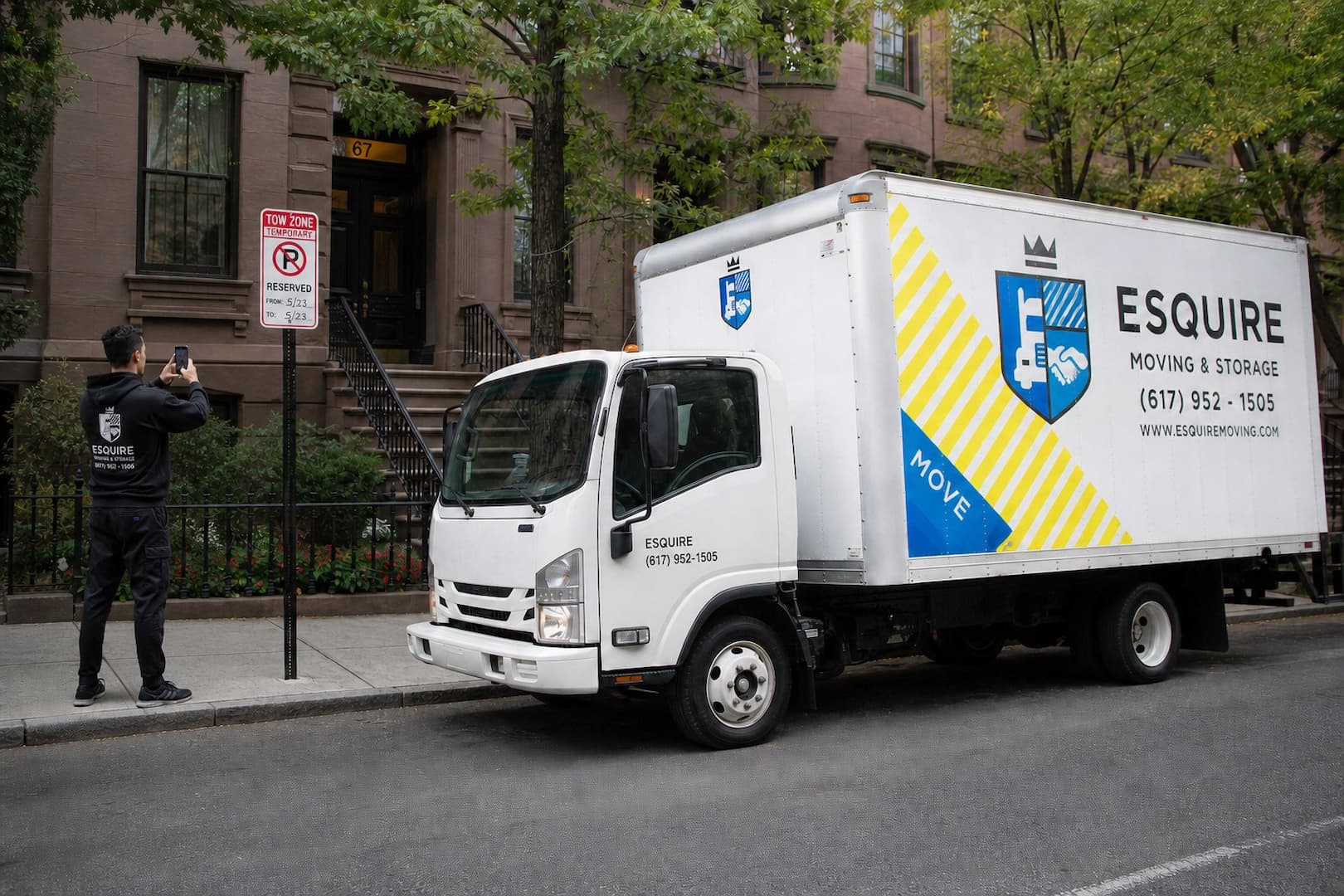
Once you have the approved materials, signs should be posted and flyers placed on cars at the designated address at least 48 hours before the move. This gives nearby drivers notice that the space is reserved.
Step 7: Keep your mover updated
Tell your moving company whether a permit has been approved, where the space is located, what time it applies, and whether any street restrictions exist. If the permit is not approved or the signs do not arrive, the mover should know before the truck is dispatched.
Posting Signs and Flyers: Why the 48-Hour Window Matters
Posting signs is not just a formality. It gives current parkers time to move their vehicles and helps protect the reserved space. If signs are posted too late, cars may remain in the space, and the moving truck may not have the access you expected.
The standard planning approach is simple: once you receive the approval materials, post signs and place flyers on vehicles at the designated address at least 48 hours before the move. If you cannot be in Boston to do this yourself, arrange for someone local to handle it.
Important
A permit that is approved but not properly posted may not solve your moving-day parking problem. The moving crew needs physical curb space, not just an approved application.
What if someone parks in the reserved space?
If someone takes the reserved moving space, the City of Boston directs residents to contact the Boston Police Department at the moving-day number listed in the city’s moving guidance. In practice, you should also notify your moving company quickly so the crew can adjust the loading plan while the parking issue is handled.
Boston Moving Permit Cost, Meters and Permit Details
The typical Boston moving truck permit fee is listed as a range, usually depending on whether the reserved space involves metered parking. The common planning range is $69 to $109.
| Permit detail | Typical rule | Planning note |
|---|---|---|
| Permit duration | One day | Plan for the specific move date, not a flexible date range. |
| Time window | 7 a.m. to 5 p.m. | Confirm your mover’s arrival window and building move hours. |
| Standard size | Two parking spaces | A standard truck space helps reduce long carry distance. |
| Typical cost without meters | $69 | Use the current city application for the final fee. |
| Typical cost with meters | $109 | Metered spaces usually cost more than non-metered spaces. |
| Online application | At least 15 days away and no more than 8 weeks away | Best option when you are planning early. |
| In-person application | At least 3 days away and no more than 8 weeks away | Useful when the move is too close for online processing. |
Permit fees are usually small compared with the cost of a delayed moving crew, a long carry, or a truck parked far from the entrance. For hourly local moves, good parking can be one of the most practical ways to control the final price.
Important Parking Restrictions a Moving Permit Does Not Override
A moving permit helps reserve space, but it does not override every street rule. This is one of the most common misunderstandings about Boston moving permits.
Street cleaning
Moving permits can interact with street cleaning rules, but they do not make street cleaning irrelevant. If your permit date overlaps with street cleaning, plan carefully and follow the city’s instructions. In some cases, someone may need to stay with the vehicle during street cleaning.
Snow emergencies
Moving permits do not override snow emergency regulations. If a snow emergency affects your move date, your parking plan may need to change. Winter moves should always include a weather backup plan.
For weather-related moving advice, read: Do Movers Work in Rain or Snow?
Construction zones, accessible parking and tow zones
Moving permits do not allow parking in construction zones, on-street accessible parking spaces, no stopping areas, no standing areas, or tow zones. Before applying, look carefully at the curb where you want the truck to park.
North End and special events
Some neighborhoods and dates may be affected by festivals, road closures, events, construction, or other restrictions. The North End can be especially complicated during summer feast periods. If your move is in a neighborhood with event-related street impacts, check before applying.
Do not assume a permit overrides signs on the street
Before applying, check the actual curb: meters, resident signs, hydrants, bus stops, loading zones, bike lanes, tow zones, construction notices, accessible spaces, street cleaning signs, and snow emergency routes can all affect the plan.
Moving Containers, PODS-Style Moves and Rental Vehicles
Moving containers and rental vehicles have special rules. Do not assume that every vehicle or container qualifies for the same moving truck permit process.
Personal cars and minivans
Boston moving truck permits are for moving trucks, not personal vehicles, rental cars, or minivans. If you are moving only with a personal car, you cannot treat the moving truck permit as a general parking reservation.
Moving containers
Moving containers may require different handling. Boston’s rules distinguish between general moving containers and PODS-branded containers. If you are using a container, confirm the exact process before booking the delivery date.
If you are comparing a portable container move with hiring full-service movers, read: PODS vs Full-Service Movers: Which Is Better for a Boston Move?
Rental moving trucks
Rental moving trucks may be eligible when they meet the moving truck permit requirements. The key is that the permit is for moving trucks, not ordinary passenger vehicles. If you are unsure, confirm before relying on the permit for moving-day access.
Boston Moving Permit vs Building Rules: You May Need Both
A parking permit and building approval are separate things. The permit helps with curb space outside. Building rules control access inside the property.
Many Boston apartment and condo buildings require some combination of:
- elevator reservation,
- certificate of insurance,
- specific move-in or move-out hours,
- freight elevator use,
- loading dock reservation,
- hallway or elevator protection,
- front desk approval,
- management notice,
- service entrance instructions.
The best moving plan connects all of these details. A reserved parking space does not help if the elevator is unavailable. An elevator reservation does not help if the truck cannot park. A certificate of insurance does not help if the building has not approved the move window.
Best order for building and permit planning
| Planning step | Why it matters | Best timing |
|---|---|---|
| Confirm move date | Permit, movers, keys and building access depend on the date. | As soon as your lease or closing schedule is clear. |
| Ask building about moving rules | You may need COI, elevator reservation or loading dock approval. | Before applying for the permit when possible. |
| Check truck parking | The permit should match the actual truck access plan. | Before booking movers or immediately after. |
| Apply for permit | Processing, mailing and sign posting take time. | Online at least 15 days before, or in person if closer. |
| Send details to mover | Crew size, truck size and arrival plan depend on access. | Before the final move confirmation. |
How a Moving Permit Can Affect Your Final Moving Cost
A moving permit is not a moving discount, but it can help prevent avoidable time costs. For hourly local moves, the total price is often affected by how long the move takes. Parking close to the entrance helps the crew work more efficiently.
How bad parking increases labor time
Bad parking can create a long carry. A long carry means movers must walk farther on every trip. That may sound small, but it adds up quickly across dozens of boxes, furniture pieces, mattress bags, wardrobe boxes, and fragile items.
For more detail on why estimates change, read: Why Did My Moving Quote Change?
How permits help avoid truck delays
If the crew arrives and there is nowhere to park, the move starts with a problem. The crew may need to circle the block, wait, double-park temporarily, or stage the move from a worse location. That time can affect the move schedule, especially if the building has a strict elevator window.
When a permit may save more than it costs
A permit can be especially worthwhile when:
- the move is hourly,
- you have more than a few items,
- the entrance is far from available parking,
- the street is narrow or congested,
- you have an elevator reservation with a strict time window,
- you are moving during a busy time,
- you have heavy furniture or many boxes,
- parking uncertainty could create a long carry.
To understand how travel time and labor time may appear in your quote, read: Do Movers Charge Travel Time in Boston?
Boston Neighborhood Planning Tips
Boston neighborhoods are different enough that a permit plan should be location-specific. The same truck that works easily in one area may be difficult to stage in another.
Back Bay
Back Bay has narrow streets, high demand, resident parking, meters, older buildings, and busy curb space. Permits are often important, especially for apartment and brownstone moves.
Beacon Hill
Beacon Hill is one of the most access-sensitive areas in Boston. Streets can be narrow, turns can be tight, and truck placement matters. Permit planning should happen early.
North End
The North End can be complicated because of narrow streets, heavy pedestrian activity, restaurants, deliveries, festivals, and seasonal road impacts. If you are moving during summer events, confirm restrictions before applying.
South End
South End moves often involve brownstones, resident parking, tight curb space, and older stairs. A permit can help keep the moving path shorter.
Allston and Brighton
Allston and Brighton can be extremely busy around late August and September 1. Student move-in and lease turnover can make curb space competitive. Apply early and avoid assuming parking will be available.
Fenway and Mission Hill
Fenway and Mission Hill often involve students, apartment buildings, tight streets, and busy traffic patterns. Permit planning can reduce delays, especially near lease turnover dates.
Seaport
Seaport moves may involve high-rise buildings, loading docks, building management, service elevators, and strict move windows. A city parking permit may not be the only planning step; building approval is often just as important.
Common Boston Moving Permit Mistakes to Avoid
Most moving permit problems are avoidable. They usually happen because the permit is treated as a last-minute detail instead of part of the move plan.
| Mistake | Why it causes problems | Better approach |
|---|---|---|
| Applying too late | You may miss the online window or fail to receive signs in time. | Start permit planning as soon as the date is known. |
| Not posting signs 48 hours ahead | Cars may stay in the reserved space. | Post signs and flyers as soon as materials allow. |
| Assuming the permit overrides all restrictions | Tow zones, snow emergencies and construction zones may still apply. | Check curb signs and restrictions before applying. |
| Ignoring the delivery address | Both pickup and delivery access affect the move. | Plan truck access at both locations. |
| Not telling the mover about permit status | Crew and truck planning may be wrong. | Share the permit status, address, date, and curb location with your mover. |
| Confusing building approval with street permit | The truck may have parking but the building may not allow the move. | Confirm COI, elevator, loading dock and building hours separately. |
Boston Moving Permit Planning Checklist
Use this checklist before applying and again before moving day.
Before applying
- Confirm the exact moving date.
- Confirm the address you are moving into.
- Check whether the truck will park on a Boston city-owned street.
- Look at the actual curb: meters, resident parking, tow zones, hydrants, bike lanes, bus stops, construction and street cleaning.
- Ask your building about loading dock, elevator, COI and move-hour rules.
- Ask your mover what truck size and curb space are needed.
- Apply early enough to receive and post materials.
After approval
- Watch for the physical permit materials.
- Post signs and flyers at least 48 hours before the move.
- Take photos of the posted signs for your records.
- Share permit details with your moving company.
- Reconfirm elevator, loading dock and building access.
- Check weather, snow emergency alerts, construction and street restrictions before moving day.
FAQ: Boston Moving Permits
Do I legally need a moving permit in Boston?
A Boston moving truck permit is not legally required for every move. However, it is recommended in many neighborhoods because it helps reserve parking space for the moving truck and can prevent parking problems on moving day.
What does a Boston moving permit reserve?
It reserves curb space for a moving truck at a specific address and date. A standard one-day moving truck permit is typically for two parking spaces.
What time does a Boston moving permit cover?
The one-day moving truck permit window is typically 7 a.m. to 5 p.m. You should still confirm your mover’s arrival time and your building’s allowed move hours.
How far ahead should I apply online?
Online applications should be submitted at least 15 days before the move and no more than 8 weeks before the move.
Can I apply in person if my move is soon?
Yes. In-person applications are available when the move is at least 3 days away and no more than 8 weeks away.
How much does a Boston moving permit cost?
The typical fee range is $69 to $109, depending on whether metered spaces are involved. Always use the current city application for the final fee.
When should I post the moving permit signs?
After receiving the approved materials, post signs and place flyers on cars at the designated address at least 48 hours before moving day.
What if someone parks in my reserved moving space?
The City of Boston instructs residents to contact the Boston Police Department if the reserved moving space is occupied. You should also notify your moving company so the crew can adjust the plan while the issue is handled.
Does a moving permit override street cleaning?
Not completely. If your permit overlaps with street cleaning, follow the city’s instructions carefully. In some cases, someone may need to stay with the vehicle.
Does a moving permit override snow emergency rules?
No. Moving permits do not override snow emergency regulations. Winter moves need extra weather and parking planning.
Can I use a Boston moving permit for a personal car or minivan?
No. The moving truck permit is for moving trucks, not personal vehicles, rental cars, or minivans.
Can I get a permit for a moving container?
Moving containers may require in-person handling, and PODS-branded containers follow a different process. Confirm the correct permit process before scheduling container delivery.
Do I need a permit if my building has a loading dock?
Usually, a city curbside moving permit is not needed if the truck uses a private building loading dock. However, you still need building approval, dock reservation, elevator access and any required COI.
Should I get a permit for a small move?
If the truck needs to park on a busy street, yes, it may still be worth it. The size of the move matters less than the parking situation and truck-to-door distance.
Can a moving permit lower my moving cost?
It can help indirectly. Good truck parking can reduce long carry time, which may reduce labor time on an hourly move.
Does my moving company apply for the permit?
Policies vary. Some customers apply themselves, while some movers or third-party permit services may help. Confirm responsibility early so the permit is not missed.
Bottom Line: Plan the Permit Before It Becomes a Moving-Day Problem
A Boston moving permit is one of the simplest ways to reduce parking uncertainty on moving day. It is not required for every move, but it is often a smart planning step when a moving truck needs curb space on a public Boston street.
The best time to think about the permit is not the day before the move. Start when your date and address are clear. Confirm whether the street is eligible, check curb restrictions, apply within the correct timeline, watch for the physical materials, post signs at least 48 hours in advance, and share the plan with your moving company.
Parking is not just a convenience. It affects labor time, building access, elevator windows, long carry distance, and the overall flow of the move. A well-planned permit can help your movers work efficiently and help you avoid unnecessary stress.
Planning a Boston move?
Esquire Moving can help with local moves, long-distance moves, packing, storage, Boston parking logistics, condo requirements, stairs, elevators, and access planning. Request a quote with your move date, addresses, inventory, floor level, building rules, elevator details, and parking situation so the team can help you plan the right moving-day setup.