



A professional move from Boston to New York generally costs about $1,100 to $7,500 or more. A lightly furnished studio may fall near the low end. A two-bedroom apartment with normal access often sits in the middle. A larger household, full packing, difficult stairs, restricted elevator windows or a dedicated truck can push the total beyond the upper end.
That broad range is not a useful quote by itself. The price is built from the shipment you actually have, the service model you choose and the time required at both addresses. Bedroom count is only a shortcut. A minimalist two-bedroom can cost less than an overfilled one-bedroom with a storage unit, library, sectional and fourth-floor walk-up.
This guide focuses narrowly on the cost decision: what realistic 2026 planning ranges look like, what a Boston-to-New York estimate should include, how direct and consolidated service differ, which access details change the number and how to compare quotes on equal terms. If you are ready to discuss scheduling and service rather than research pricing, visit Esquire Moving’s Boston–New York moving service page.
Jump to a section:
Quick Answer: What Should You Budget?
Practical 2026 planning range
Budget roughly $1,100–$2,200 for a studio, $1,300–$2,800 for a one-bedroom, $2,000–$4,000 for a two-bedroom, $3,000–$5,500 for a three-bedroom, and $4,000–$7,500+ for a larger home. These are planning ranges for professional loading, interstate transportation and unloading—not guaranteed rates.
A very small qualifying move may be advertised from a lower starting price, while a high-volume apartment can exceed the range assigned to its bedroom count. The reliable way to price this route is a detailed inventory plus access information for both addresses. The more accurately those inputs describe the real move, the narrower the estimate can be.
For a broader explanation of interstate pricing beyond New York, see how much long-distance movers cost from Boston. To build your own first-pass budget before requesting an estimate, use the Boston moving cost calculator guide.
Boston to New York Moving Costs by Home Size
The ranges below reflect a standard household move between the Boston area and New York City with professional loading, transportation and unloading. They assume a reasonably accurate inventory and ordinary access. Packing, storage, specialty items, severe parking constraints and unusually long carries can move a job outside the range.
Studio
1-bedroom
2-bedroom
3-bedroom
4+ bedrooms
Planning ranges reviewed for July 2026. Your written estimate should be based on the actual shipment, services and access—not bedroom count alone.
Apartment size is not shipment size
Movers do not transport the number of bedrooms; they transport specific items. Include balcony furniture, basement cages, off-site storage, bicycles, gym equipment, artwork, plants and everything inside closets. Omitting one storage area can change the truck space, labor plan and final charge.

An itemized inventory, floor plan and measurements help document furniture volume, packing needs and access before the written interstate estimate is prepared.
Why a 215-Mile Move Is Not Priced Like a Local Move
Boston and New York are close enough that the drive can take roughly four to five hours in favorable conditions. The job is still an interstate move because the shipment crosses a state line. That changes the operating plan, documentation, carrier requirements and the amount of time the truck and crew are committed to one route.
A small apartment can sometimes load in Boston and deliver in New York on the same day, but driving time is only one part of the job. A real schedule must include:
- crew arrival, walkthrough and documentation at pickup,
- furniture protection and any disassembly,
- loading through the actual stairs, hallway or elevator route,
- Boston traffic and legal truck routing,
- required driver breaks and operating constraints,
- New York traffic and legal curb access,
- building check-in, elevator or loading-dock availability,
- unloading, placement and agreed reassembly.
For a small, well-prepared apartment with straightforward access, the entire operation may occupy a long service day. Larger moves may use next-day delivery because loading and unloading cannot safely fit around building windows and traffic. “Four hours away” should never be interpreted as “a four-hour moving job.”
What Should Be Included in a Boston-to-New York Quote?
Price comparisons fail when one company quotes transportation only and another includes labor, protection and route expenses. Ask every mover for a written scope and compare the same services.
Core service
Usually expected
Loading, transportation, unloading, standard moving equipment and basic furniture protection should be clearly described.
Route expenses
Confirm in writing
Fuel, mileage, tolls, travel, parking and overnight costs may be included or itemized depending on the pricing model.
Optional scope
Often additional
Packing, unpacking, materials, storage, special crating, premium valuation and complex specialty-item handling.
Transportation
Labor
Furniture protection
Access
Packing
Storage
Valuation
Read the estimate, order for service and bill of lading before moving day. If a sales representative says a cost is included, the written documents should say the same thing.
How Movers Calculate the Price
There is no single mandatory pricing formula for every Boston-to-New York carrier. One mover may offer a flat rate based on inventory and access. Another may calculate interstate transportation from shipment weight and mileage. A direct short-haul carrier may use a time-and-resource model. The meaningful question is not which label sounds best; it is what inputs the mover used and what circumstances allow the price to change.
1. Shipment weight, volume or itemized inventory
The more you move, the more truck capacity, handling time and protective material the job requires. Weight and cubic volume are different measurements, but both are attempts to quantify the shipment. If the price is based on a detailed item list, confirm that quantities and sizes are accurate—“sofa” does not distinguish a loveseat from a large sectional.
2. Labor at pickup and delivery
A loading dock beside the elevator is efficient. A fourth-floor walk-up with a narrow turn is not. Labor depends on the number of pieces, wrapping, disassembly, stairs, carry distance and how consistently the crew can use an elevator. The New York destination is often the less predictable half of the estimate.
3. Truck and delivery model
A dedicated truck commits equipment and capacity to your shipment. Consolidated service shares line-haul capacity with other customers. The first usually provides a tighter schedule; the second may reduce transportation cost but uses a broader delivery window. These are different products and should not be compared as if only the price changed.
4. Date and demand
Summer, weekends, lease-turnover dates and the final days of a month attract more demand. Boston’s September 1 cycle is an extreme example. If your lease allows flexibility, a Tuesday or Wednesday near the middle of a month often gives you more scheduling options. For the mechanics behind peak pricing, see why Boston movers cost more at the end of the month.
5. Optional services and risk allocation
Professional packing, custom crating, short-term storage, unpacking and higher valuation protection add service or reduce the risk you retain. They should be shown clearly enough that you can accept or decline them intentionally.
Dedicated Truck vs Consolidated Service
The delivery model can change both the price and the experience. Ask which model the quote assumes before comparing totals.
Truck space
Delivery timing
Handling
Cost profile
Best fit
“Same-day” needs operational conditions
Same-day delivery may be practical for a qualifying small move, but it depends on early loading, shipment size, traffic, driver hours, legal truck routing and confirmed access in New York. A building that closes its service elevator at 4 p.m. can make a same-day plan unrealistic even when the highway drive is short.
How Boston Pickup and New York Delivery Affect Cost
Access is the variable most likely to make a route-specific estimate more useful than a national calculator. The highway mileage barely changes; the work between the apartment door and truck can change dramatically.
Boston origin costs
- Reserved curb space: A Boston moving permit can reduce the distance between the entrance and truck.
- Brownstones and walk-ups: Narrow stairs and landings slow large furniture and may require disassembly.
- Elevator reservations: A building may allow moves only during a specific service window.
- COI requirements: Managed buildings may require a certificate of insurance before admitting the crew.
- Truck route: A professional driver must account for commercial-vehicle restrictions and low-clearance roads.
If the truck will load on a Boston street, use the Boston moving permit guide. If either building asks for insurance paperwork, review the guide to moving certificates of insurance.
New York destination costs
- Curb access: Dense traffic, bus lanes, hydrants and posted restrictions can prevent the truck from stopping near the entrance.
- Long carry: Every box and furniture piece must travel farther when the legal loading position is down the block.
- Walk-up delivery: A fifth-floor walk-up is a different labor plan from a freight-elevator building.
- Building move window: Doorman and managed properties may require a scheduled freight elevator or loading dock.
- COI wording: New York buildings may provide exact certificate-holder and additional-insured instructions.
- Shuttle possibility: If a large truck cannot legally or physically approach the building, a smaller transfer vehicle may be needed.
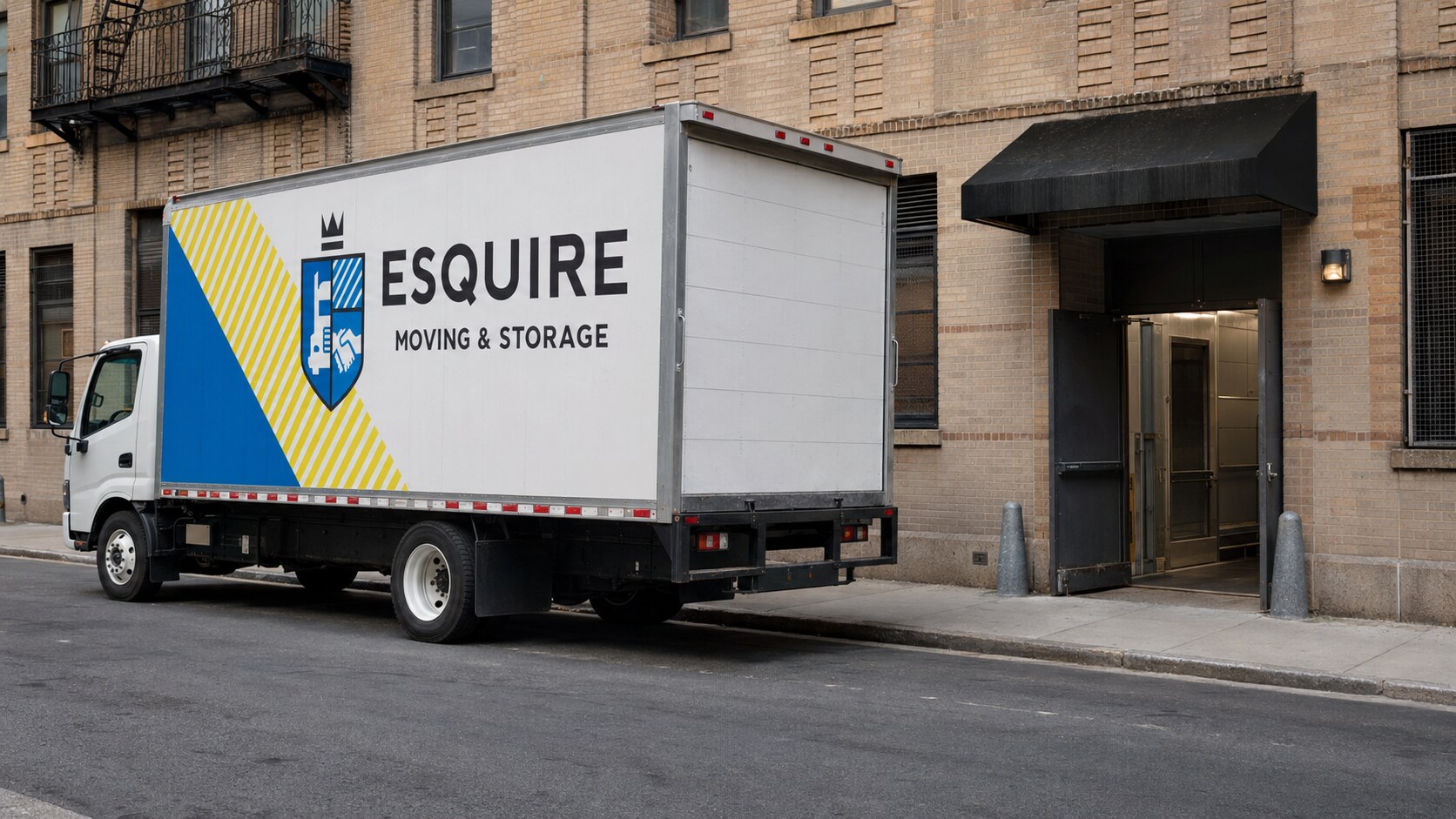
Confirm the legal truck position, entrance, freight-elevator window and building check-in procedure before the Boston crew departs.
Plan the two addresses as one schedule
A 9 a.m. Boston elevator reservation and a 2 p.m. Manhattan elevator reservation may appear compatible on a map but leave little margin for wrapping, loading and traffic. Share both building windows before accepting the move plan.
Three Sample Boston-to-New York Cost Calculations
These examples show how the components interact. They are illustrations, not offers or fixed rates.
Scenario A
Lean 1-bedroom
Base move: $1,650
Partial packing: $250
Access adjustment: $150
Illustrative total: $2,050
Elevator pickup, one-flight delivery, accurate inventory and no storage.
Scenario B
Typical 2-bedroom
Base move: $2,650
Packing/materials: $400
NYC long carry: $250
Illustrative total: $3,300
Normal furnishings, direct service, reserved Boston curb and managed NYC building.
Scenario C
Full 3-bedroom
Base move: $4,050
Full packing: $1,250
Complex access: $350
Illustrative total: $5,650
House inventory, basement items, packing day and restricted delivery window.
A useful estimate should let you see which component would change if you pack yourself, remove items, change the date or improve truck access. If a quote changes after the survey, ask for the revised inventory and scope rather than accepting a new total without explanation. The guide to why moving quotes change explains the most common triggers.
Full-Service Movers vs Container vs Rental Truck
The cheapest advertised option is not necessarily the cheapest complete move. Compare the total door-to-door job, including labor, parking, equipment, fuel, tolls, protection, storage, your time and what happens if the destination cannot accept the truck or container.
Full-service movers
Moving container
Rental truck
DIY and container totals vary widely. Advertised equipment rates often exclude fuel, tolls, optional protection, labor and destination logistics.
The container problem in dense neighborhoods
A container can work well at suburban homes with driveways. It can be difficult at a Back Bay curb or Manhattan apartment where the unit cannot remain unattended. Confirm placement permissions, loading time and pickup timing before paying a deposit.
The hidden cost of a rental truck
A rental truck shifts professional labor and driving risk to you. Include the real cost of helpers, pads, dollies, fuel, tolls, parking, possible tickets, damage protection and time off work. Also confirm that the vehicle can use your intended route and that you are comfortable parking it at the New York destination.
Binding, Non-Binding and Not-to-Exceed Estimates
For an interstate household move, the estimate type matters as much as the headline number. Federal guidance requires a written estimate of charges and states that it should be based on a physical or virtual survey of the household goods, unless a permitted waiver applies.
Binding estimate
A binding estimate fixes the price for the listed shipment and services. It does not make unlimited additions free. If you add furniture, request packing or reveal different access, the mover may prepare a revised written estimate or change order before loading.
Non-binding estimate
A non-binding estimate is an informed projection, not a guaranteed final total. The eventual charge can reflect actual weight and performed services. Under federal rules, a mover generally cannot demand more than 110% of a non-binding estimate at delivery; remaining lawful charges may be billed later.
Binding not-to-exceed estimate
This structure sets a ceiling for the agreed scope while allowing the price to decrease if the shipment weighs less than estimated, depending on the mover’s tariff and documents. Terminology varies, so read the actual contract rather than relying on the sales label.
Do not sign a blank or incomplete estimate
Confirm the inventory, both addresses, requested services, access notes, pickup date, delivery terms and valuation selection. Use the Federal Motor Carrier Safety Administration’s Protect Your Move resources and mover search to review interstate consumer information and carrier registration.
Also distinguish valuation from third-party insurance. Released-value protection provides minimal carrier liability; full-value protection changes how the mover may repair, replace or settle an eligible loss under the terms you select. See moving valuation vs insurance before choosing only by price.
How to Lower the Cost Without Creating Moving-Day Problems
Remove expensive-to-move, low-value volume
Large inexpensive furniture can cost more to transport than to replace. Compare the item’s condition, replacement cost, sentimental value and the space it occupies. Do this before the video survey so the quote reflects the final shipment.
Choose a flexible date
Ask for two or three dates around the middle of the month, ideally midweek. Do not change the date until both buildings confirm their move windows. A lower transportation rate is not a saving if it creates a second month of rent or a missed elevator reservation.
Make the inventory exact
Walk through every room on video. Open closets, show storage areas and identify pieces that will be sold or discarded. Accurate information may not always lower the first number, but it reduces the risk of a higher revised number on moving day.
Pack selectively
Self-pack books, linens, clothing and ordinary household items if you have time and can do so safely. Consider professional packing for artwork, televisions, glass, dishes or time-sensitive last rooms. Esquire Moving’s professional packing services can be quoted as full or partial packing rather than an all-or-nothing choice.
Improve truck access
Reserve Boston curb space when appropriate and give the mover photos of the New York block. A shorter carry can save labor and help protect a strict delivery window. Do not promise parking you cannot legally secure.
Compare scope, not just total
A $2,100 consolidated quote with a broad delivery window is not automatically better or worse than a $2,600 dedicated quote with direct delivery. Decide what schedule, handling and included services you need, then compare providers against that same requirement.
What to Send for an Accurate Quote
- complete Boston pickup and New York delivery addresses,
- move date plus any alternate dates,
- room-by-room furniture and estimated box count,
- photos or video of closets, basement, garage and storage unit,
- floor number and stairs at both locations,
- elevator type, reservation time and interior dimensions when relevant,
- distance from legal truck position to each entrance,
- building COI instructions and submission deadline,
- items needing disassembly, crating or special handling,
- packing and unpacking scope,
- storage or additional-stop requirements,
- requested delivery date or acceptable delivery window.
Questions to ask every mover
- Is this a carrier or a broker?
- What USDOT number will operate the move?
- Is the estimate binding, non-binding or not-to-exceed?
- Is the truck dedicated to my shipment?
- What is the pickup window and delivery window?
- Are fuel, mileage and tolls included?
- How are stairs, long carries, shuttle service and elevator delays handled?
- Which packing materials and furniture protection are included?
- What valuation option does the quote assume?
- What specific changes can alter the price?
A useful quote request
“I am moving a two-bedroom apartment from a third-floor Boston walk-up to a Brooklyn elevator building. I have about 55 boxes, a queen bed, sectional, dining table, two desks and no storage unit. Boston curb space will be reserved. The Brooklyn freight elevator is available from 1–4 p.m. and requires a COI. Please quote direct and consolidated options and identify packing, tolls, valuation and access charges separately.”
A Route-Specific Planning Timeline
6–8 weeks before
4–6 weeks before
2–4 weeks before
1 week before
Moving day
FAQ: Boston to New York Moving Costs
What is the average cost to move from Boston to New York?
A realistic professional full-service budget is approximately $1,100–$7,500+, with many one- and two-bedroom moves falling between about $1,300 and $4,000. The exact price depends on shipment size, delivery model, date, packing and access.
How much does a one-bedroom move from Boston to NYC cost?
Plan on roughly $1,300–$2,800 for many one-bedroom shipments. A lightly furnished apartment with easy elevators may be lower; dense inventory, walk-ups, packing or a premium direct schedule may be higher.
How much does a two-bedroom move from Boston to New York cost?
A practical planning range is about $2,000–$4,000. Box count, office furniture, large sectionals and New York delivery access often explain where the move lands inside that range.
Can movers complete the route in one day?
Some small, direct moves can load and deliver the same day when pickup starts early and both buildings provide reliable access. Larger shipments, traffic, driver hours and restrictive elevator windows may require next-day delivery.
Is Boston to New York considered long-distance?
Yes. Regardless of the relatively short mileage, crossing from Massachusetts into New York makes it an interstate move subject to federal interstate moving rules.
Are tolls included in the quote?
They may be included in a flat rate or shown separately. Do not assume. Ask the mover to state how mileage, fuel and tolls appear in the written estimate.
Does a New York walk-up increase the cost?
It can. More flights and difficult turns add handling time and may affect crew size. Disclose the exact floor and send staircase photos during the survey.
Do I need a parking permit at both addresses?
Boston often allows residents to reserve curb space through the city’s moving permit process. New York curb rules work differently and vary by street. Ask your mover and destination building to identify the legal loading plan instead of assuming a Boston-style reserved space.
Will my New York building require a COI?
Many managed buildings do. Request the building’s exact template or wording early and send it to the mover. The building may need to approve it before reserving the freight elevator.
Is a flat rate better than hourly pricing for this route?
Neither label is automatically better. A well-defined flat rate can provide predictability; a transparent time-based structure can work for a small direct move. Compare what is included, how access delays are treated and what allows the amount to change.
What is the cheapest day to move?
Midweek and mid-month dates often have better availability than weekends and month-end dates. The cheapest practical date must still align with both leases and both building move windows.
How far in advance should I book?
Four to eight weeks is a useful target for normal dates. Book earlier for summer, weekends, month-end, September 1 or buildings with limited elevator appointments.
Can the price change after I book?
It can if the inventory, services or access differ from the agreed scope. Added items, unplanned packing, a storage stop or undisclosed stairs may require a revised written estimate. Review any revision before loading.
Should I tip movers on an interstate route?
Tipping is optional and should reflect service quality, job complexity and your budget. Ask whether the same crew will handle pickup and delivery so you can plan appropriately.
What should travel with me instead of the truck?
Keep identification, medications, keys, lease documents, valuables, chargers, essential clothing and the items you need before delivery with you. Movers also maintain lists of hazardous or restricted items they cannot transport.
Bottom Line
The useful answer is not simply that a Boston-to-New York move costs a certain average. A realistic budget is $1,100–$7,500+, but the number becomes meaningful only after the mover knows your inventory, both access routes, packing scope, desired delivery model and date.
Start by deciding whether you need direct timing or can accept consolidated delivery. Then document every item and storage area, confirm Boston curb access, obtain New York building rules and compare written estimates with the same scope. That process does more to protect your budget than choosing the lowest advertised starting price.
Get a Boston-to-New York Estimate Built Around the Actual Move
Provide both addresses, inventory, floor and elevator details, parking information, preferred dates, packing needs and delivery constraints. Esquire Moving can review the route and prepare the appropriate service plan.