Leave New York cleanly
Confirm the legal loading position, posted curb rules, carry distance, stairs, service-elevator reservation, and any certificate of insurance wording from the building.




New York to Houston · Interstate moving
A 1,600-mile move starts with a legal place to load in New York and ends with a Houston address that is ready to receive. Esquire plans both ends, protects the shipment for the long haul, and puts the route terms in writing.
Inventory and access details make the first estimate more useful.
The route in practical terms
New York City and Houston are roughly 1,628 road miles apart for many addresses. That number helps establish scale. It does not tell the crew where the truck can stand, whether a sofa clears the service elevator, or who can open the destination gate.
Those details are not small. They decide whether loading begins on time, whether the right equipment arrives, and whether delivery can move from truck to room without a last-minute detour.
Confirm the legal loading position, posted curb rules, carry distance, stairs, service-elevator reservation, and any certificate of insurance wording from the building.
Review the inventory, packing split, pickup date or period, delivery period, valuation selection, and the contact who will receive schedule updates.
Check gate codes, loading court or curb access, elevator hours, dock height, HOA or building requirements, and the person authorized to accept delivery.
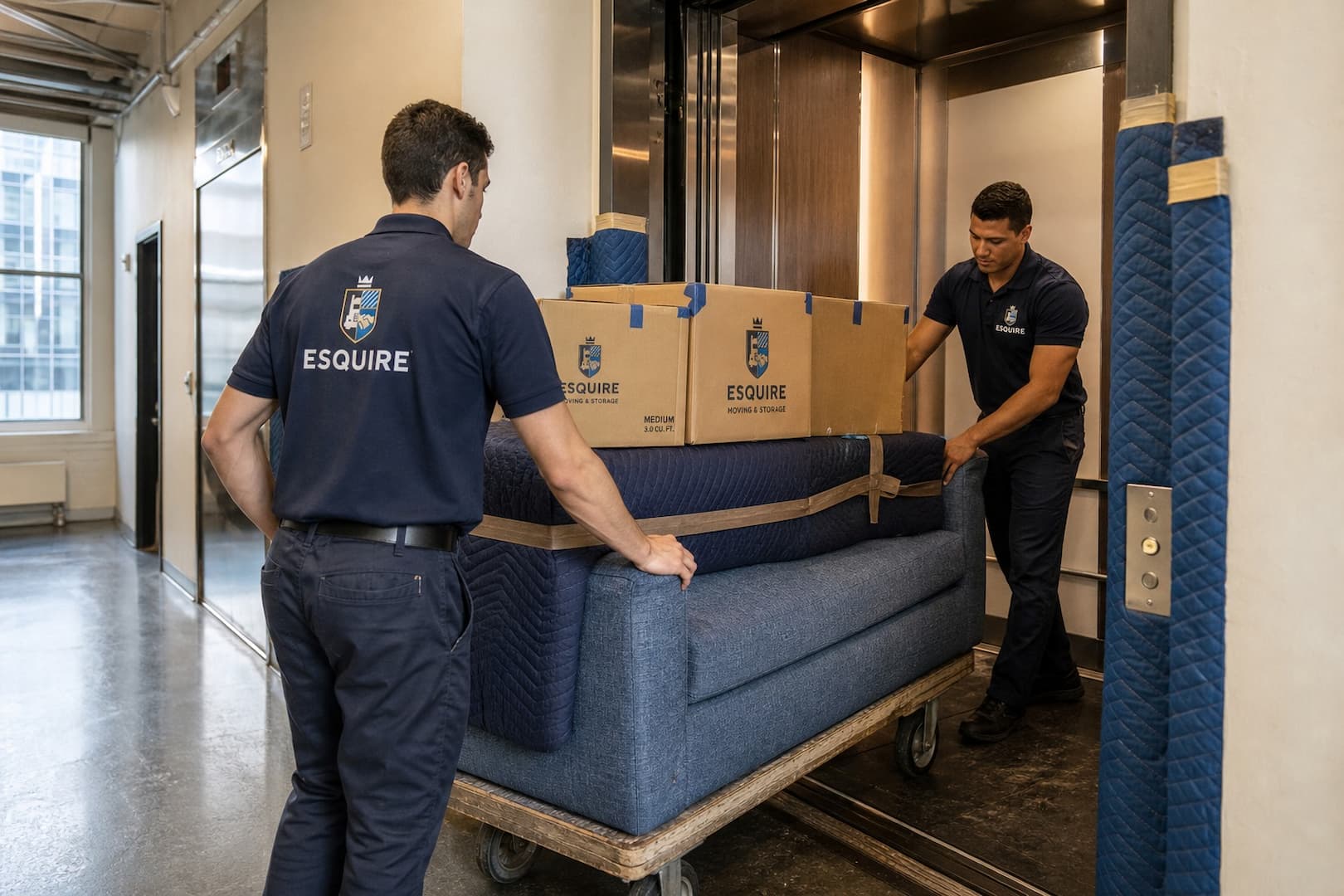
Vertical pickup, wider destination
In Manhattan, Brooklyn, Queens, the Bronx, or Staten Island, the first bottleneck may be a narrow curb, a walk-up, or a service elevator that belongs to several residents at once. Photos of the entrance, elevator, stairs, and largest pieces often answer more than a room count.
Houston can offer more space, but it is not automatically simple. A downtown tower may have a strict dock appointment; a gated community may need advance authorization; a suburban home may have a long walk from the safest truck position. The destination deserves its own review.
NYC DOT identifies commercial metered spaces and loading zones, and posted signs still control the curb. Review the current NYC loading-zone guidance rather than assuming a truck can wait wherever the entrance is closest.
ParkHouston maintains designated commercial loading zones and permit rules. For street-based access, check the current commercial vehicle loading-zone information; private properties may set separate requirements.
What belongs in the plan
A long-distance quote becomes useful when it describes the shipment, the service, and the conditions at both addresses.
Rooms, cartons, large furniture, artwork, fragile pieces, and items that need special handling.
Customer-packed boxes, partial packing, full packing, disassembly, crating, and requested unpacking.
Truck position, carry distance, stairs, elevators, loading docks, gates, and building time limits.
Pickup date or period, delivery period, contact protocol, and what happens if the destination is not ready.
The selected mover-liability option, its limits, and the procedure for noting loss or damage.
Protection for the whole trip
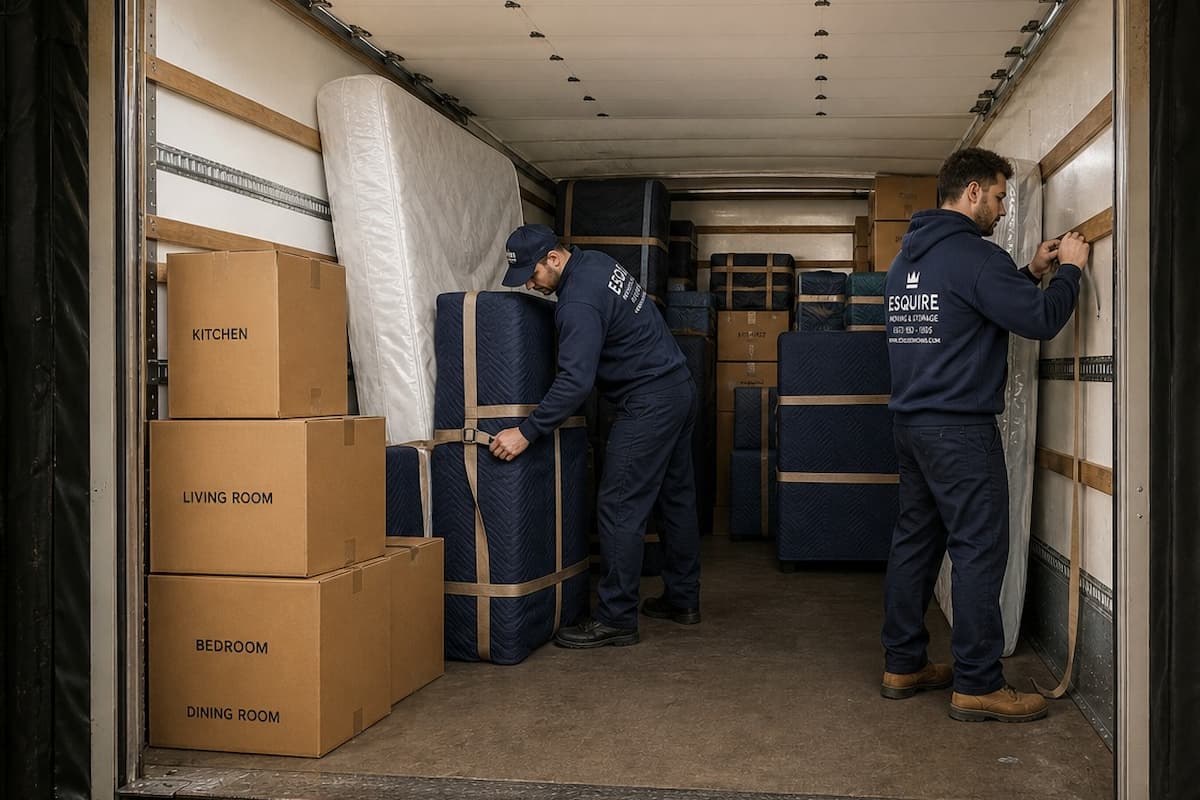
A lamp that survives the lobby can still shift on a long drive if its carton, padding, or placement is wrong. Esquire can build the packing scope around the actual shipment: a full home, selected rooms, or a short list of pieces that deserve extra attention.
Prepare for the delivery period
Delivery works best when the crew can confirm access before arrival, not from a gate or full loading court. Keep the destination plan current as your closing, lease, or building schedule changes.
Use a phone number that will be answered during the delivery period, and name a backup if travel separates you from the shipment.
Medications, documents, chargers, keys, basic tools, clothing, and irreplaceable items should travel with you, not in the moving truck.
Ask the building, HOA, concierge, or property manager to confirm the gate, dock, elevator, and move-in hours close to delivery.
Measure tight turns and doorways, clear the room plan, protect delicate floors, and flag any access change before unloading begins.
Use the pickup and delivery terms in your move documents. If a particular date matters, ask what can be confirmed in writing and what conditions could affect it.
Because the shipment crosses state lines, federal household-goods consumer rules apply. Read the estimate, order for service, bill of lading, valuation selection, and the delivery terms before signing.
FMCSA also recommends checking an interstate mover's registration and USDOT information. Keep copies of your documents and ask questions while there is still time to change the plan.
Read FMCSA's Your Rights and Responsibilities When You MoveContinue planning
Compare nearby Texas destinations or other long-distance departures from New York.
Straight answers
These are the route questions most likely to change the estimate, access plan, or written delivery terms.
The route is roughly 1,628 road miles for many New York City and Houston addresses. Exact mileage and travel conditions depend on the pickup location, destination, weather, traffic, and truck-safe routing.
The delivery period depends on the shipment, service, dates, route conditions, and the terms offered for your move. Ask for the pickup date or period and delivery period in writing rather than relying on a generic online transit estimate.
Shipment size, packing, specialty handling, stairs or elevators, carry distance, loading conditions, date, storage needs, valuation selection, and other disclosed services can affect the estimate. A complete inventory and accurate access notes at both addresses are the best starting point.
No. Posted curb signs and New York City commercial-vehicle rules still apply. Commercial metered spaces and loading zones may be available, but the nearest doorway is not automatically a legal truck position. Confirm the site plan before moving day.
Confirm the legal or private truck position, gate access, dock or elevator reservation, receiving hours, carry distance, stairs, property rules, and the on-site contact. If street access is involved, review current ParkHouston requirements.
Yes. You can request full or partial packing, furniture protection, handling for fragile pieces, and available storage options. Confirm the exact services, materials, dates, and redelivery terms in the written scope.
New York pickup, Houston delivery
Share the inventory, addresses, dates, and access notes you have now. Esquire can use them to discuss the service and route in practical terms.
Start with what you know; exact access notes can follow.