Brownstone or rowhouse
- Exterior stoop and narrow entry
- Turns on interior stairs
- Original woodwork and finished floors
- Furniture dimensions and disassembly




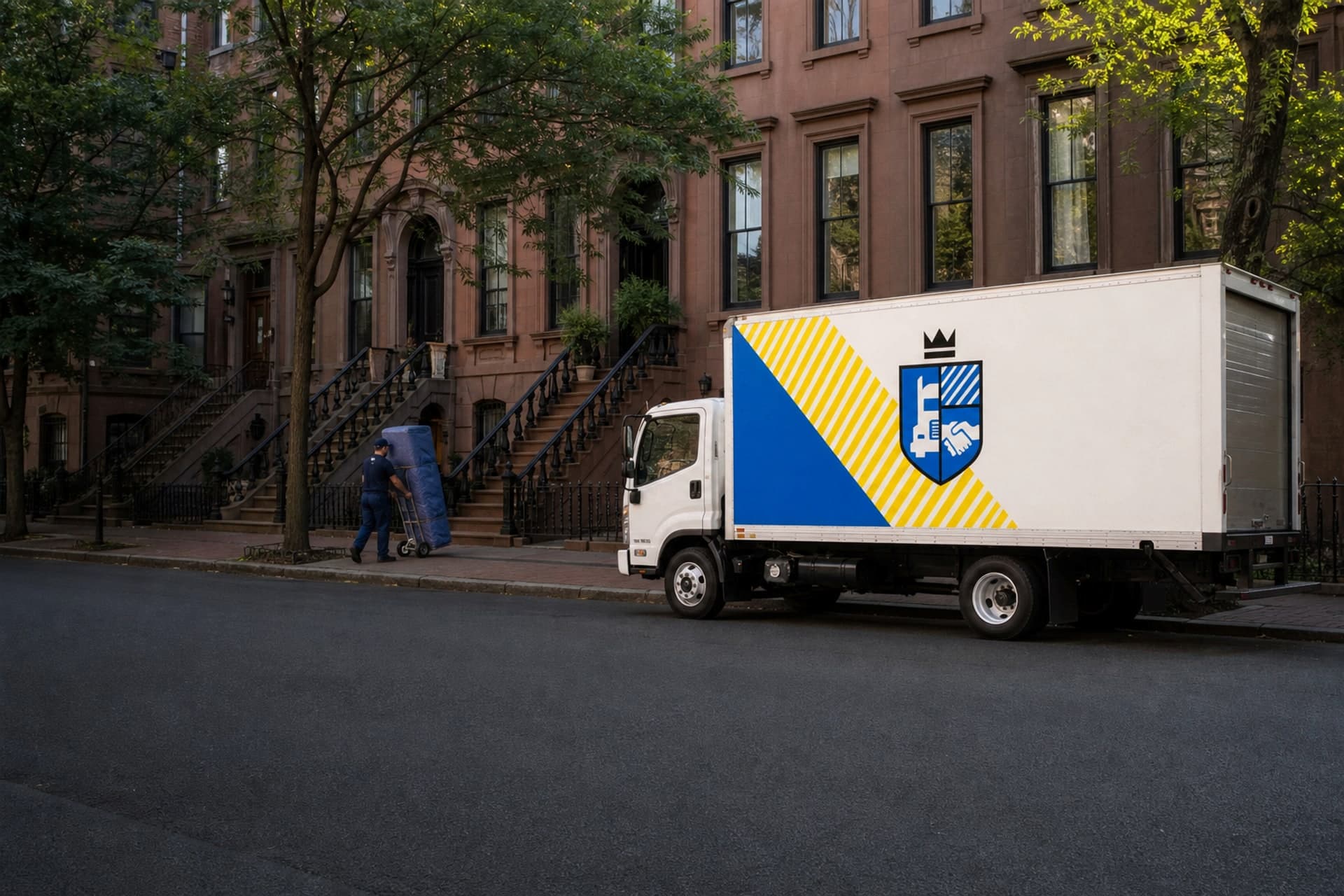
Brownstone stairs, protected interiors, service entrances, and limited curb access all shape a Back Bay move. Esquire Moving builds the plan around the property—not a generic city route.
U.S. DOT 2820253 · MC-940499 · MDPU 31796
Back Bay is a protected historic district with rows of vintage homes alongside larger condominium and apartment buildings. A street-level brownstone may lead to a narrow interior staircase, while a full-service residence may route every move through a loading dock and service elevator.
Before move day, walk the path from the legal truck space to the unit. Note exterior stairs, tight vestibules, elevator dimensions, long corridors, floor protection rules, and any item that will not turn through the normal route. Those details help prevent last-minute changes.
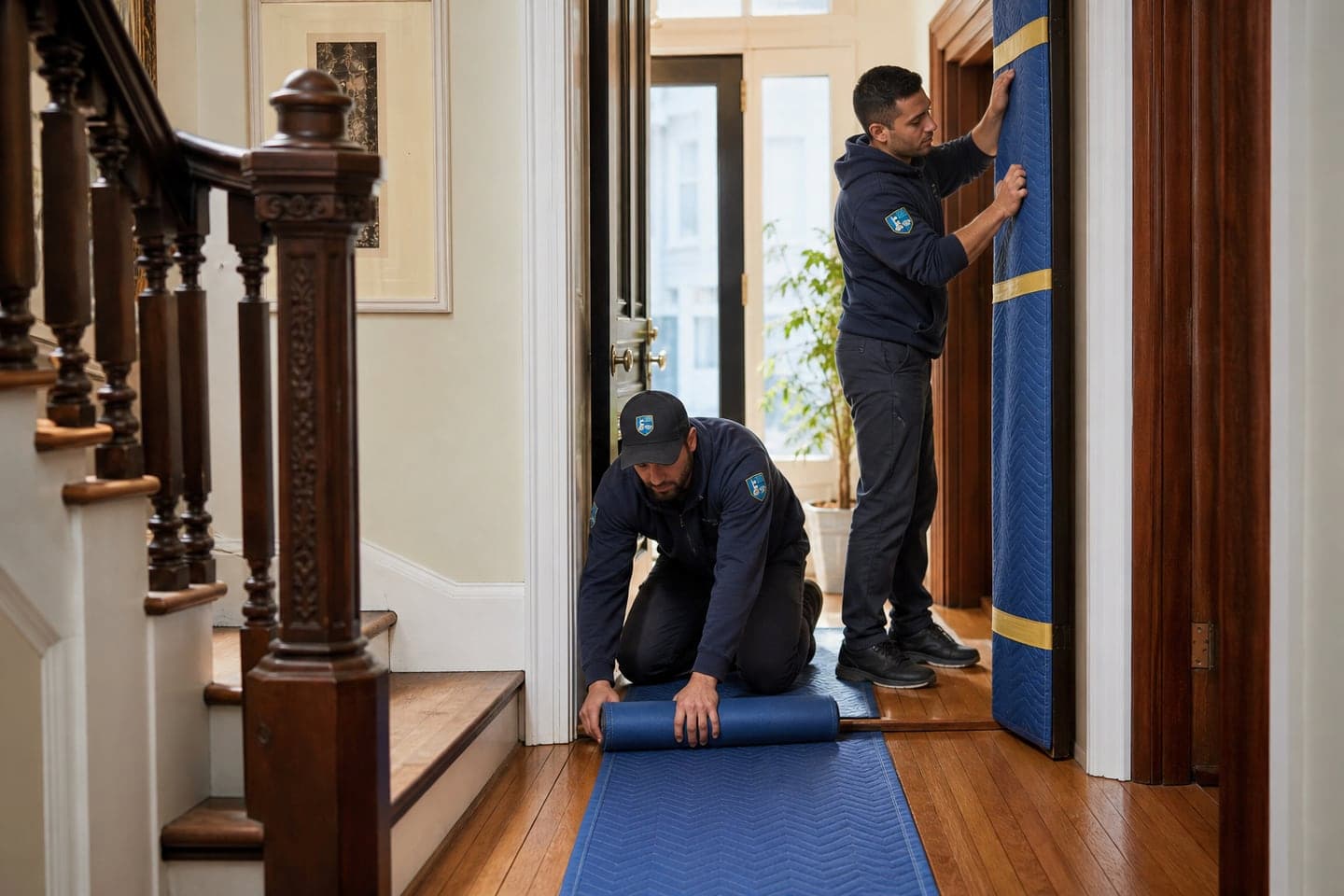
Protection choices depend on the property and the written scope.
Discuss runners, doorway protection, and building-specific requirements before the crew arrives.
Identify fragile finishes, glass, artwork, antiques, and pieces that require custom preparation.
Measure oversized items and the tightest point on the route; do not rely only on room dimensions.
Back Bay moves often involve finishes that need careful protection or building systems that run on a reservation. The correct setup depends on the residence.
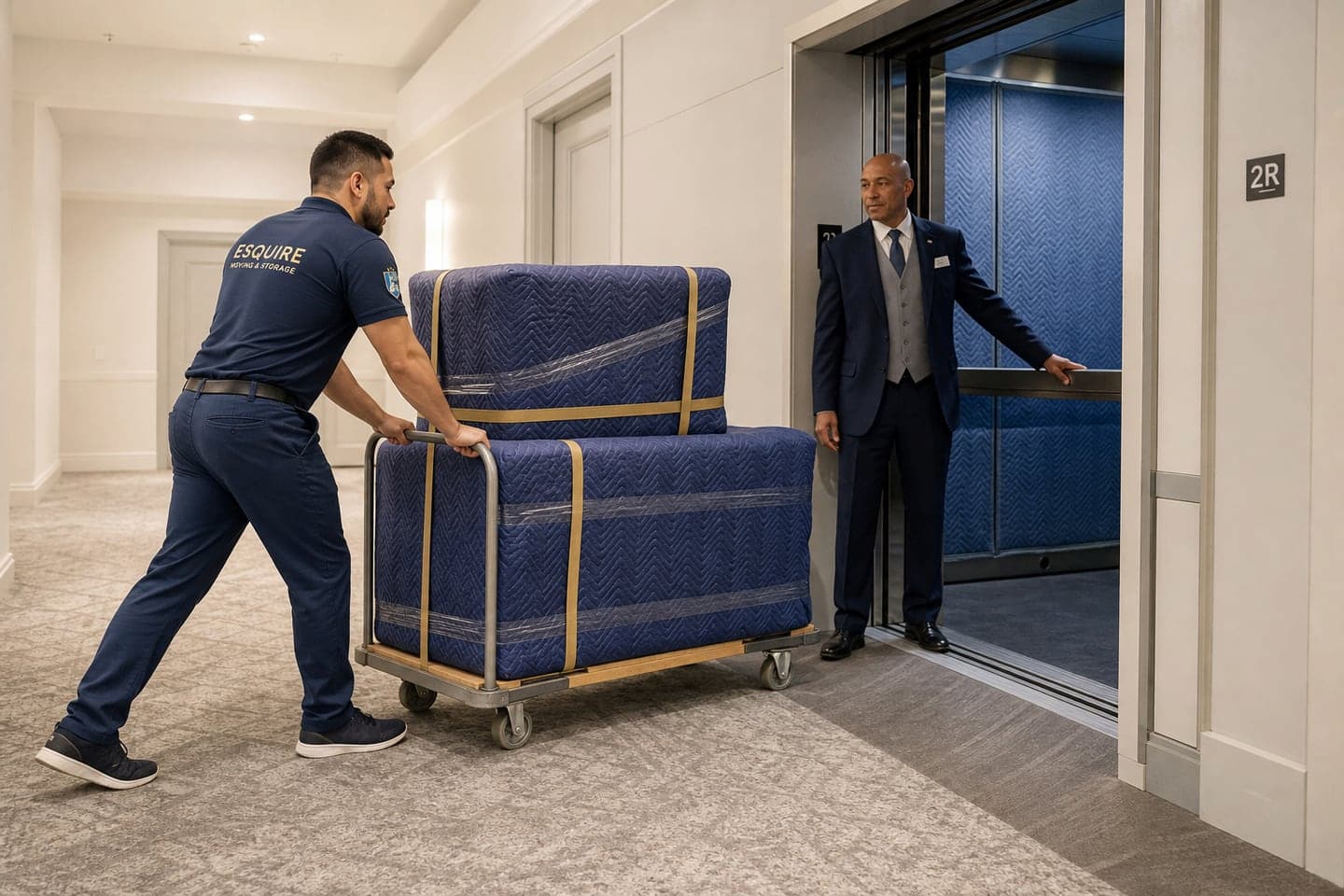
Get the correct management, concierge, or owner instructions for each address.
Send any certificate-of-insurance request with the exact wording and recipient details.
Confirm where the truck may stand and which entrance the crew must use.
Inspect common areas and the residence before the reserved access window closes.
Select only the services the shipment and property require.
Moves planned around stairs, elevators, corridors, and building rules.
Room-by-room pickup and placement for full or partial households.
Full-home, partial, and fragile-item packing options.
Wrapping plus agreed disassembly and reassembly for pieces that need it.
Advance review for artwork, antiques, pianos, and unusually delicate items.
Interstate moving with a route-specific written scope.
Share photos or measurements of tight areas, the floor at each address, elevator rules, carry distance, parking conditions, and any item that needs exceptional preparation. Esquire Moving can then prepare a written scope for the actual move.
Request my estimateHistoric brownstones can have steep exterior stairs, narrow interiors, and sensitive finishes, while managed buildings may require a service entrance, reserved elevator, insurance documents, and limited move hours. The exact address determines the plan.
Some managed properties do. Ask management for the exact requirements and recipient information, then provide them before move day. Requirements vary by building.
Measure the item and the tightest doorway, landing, or elevator on the route. Share those measurements or clear photos before the move so disassembly needs can be discussed in the written scope.
Packing and specialty preparation are available when included in the estimate. Describe each item, its dimensions, and any known handling requirements so the right materials and plan can be discussed.
A City of Boston moving-truck permit is optional but can secure a legal parking space. It may be especially useful where curb access is limited. The permit and required sign posting remain the customer’s responsibility.
Share both addresses, the move date, inventory, and the property details that matter in Back Bay. Include brownstone stairs, service elevator, loading access, plus any packing or specialty-item needs, so Esquire Moving can prepare a written estimate for your move.
Prefer to talk? Call (617) 952-1505.